REVIEW · ORLANDO
Orlando: Titanic Artifact Exhibition Ticket
Book on GetYourGuide →Operated by Gray Line of Orlando - Gator Tours · Bookable on GetYourGuide
Titanic stories hit harder when you can walk into the rooms. This Orlando exhibition uses full-scale recreations and real recovered pieces to make the ship feel close, not distant. I love the Grand Staircase and suite recreations that help you picture daily life, and I also love the hands-on moment with the iceberg-like cold. One drawback to plan for: no cameras or phone use inside, so you’ll need to experience it without recording.
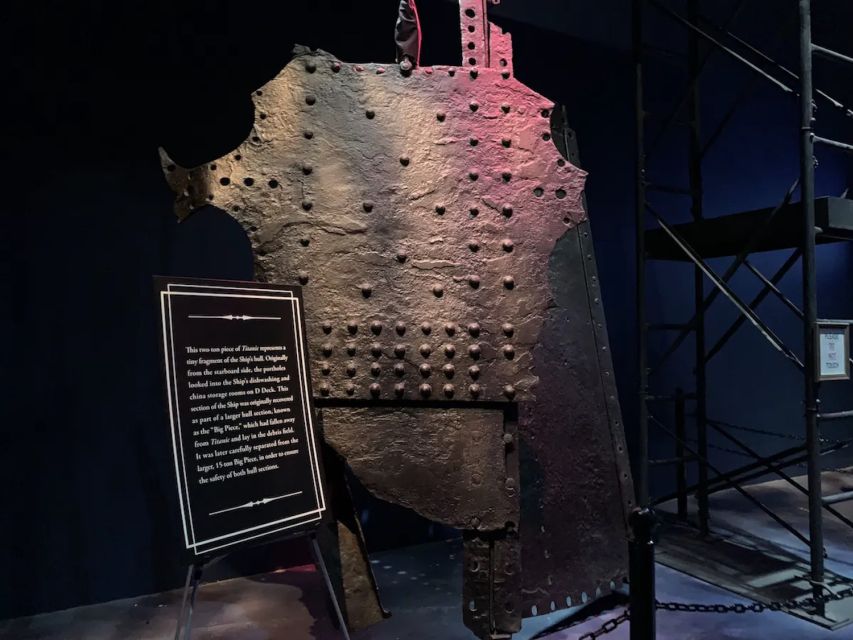
You’re getting 17 galleries spread across about 20,000 square feet, and the museum is built around real people—passengers and crew—and the objects they left behind. You’ll see staged spaces like the First-Class Suite, the Grand Staircase, and the Promenade Deck, plus a major artifact called Little Big Piece, a 2-ton section of the hull. Consider this before you go: it’s not a quick stop. If you rush, you’ll miss the small details that make it work.
The exhibition is housed in Orlando at 7324 International Dr, Orlando, FL 32819 and uses timed entry by start time availability. The ticket itself is straightforward—you bring your voucher to the admission box office and then spend your day moving gallery to gallery.
In This Review
- Key things I think you should notice
- Titanic in a Box: what the exhibition is really like
- Grand Staircase and First-Class Suites: where scale does the storytelling
- Promenade Deck, stars, and the cold-ice moment
- What you’re actually seeing: artifacts, memorabilia, and Little Big Piece
- Your one-day plan: how to pace a 17-gallery museum
- Rules you must follow: cameras, bags, phones, and what to wear
- Staff energy and the tone of the experience
- Is it worth $36? Value in time, artifacts, and hands-on moments
- Who should book this Orlando Titanic ticket?
- Should you book this Orlando Titanic Artifact Exhibition ticket?
- FAQ
- Where is the admission box office and where do I redeem my voucher?
- How long is this experience?
- Can I take photos or use my camera inside?
- Are food and drinks allowed in the exhibition?
- Do you provide transportation or meals?
- Can I cancel and get a refund?
Key things I think you should notice
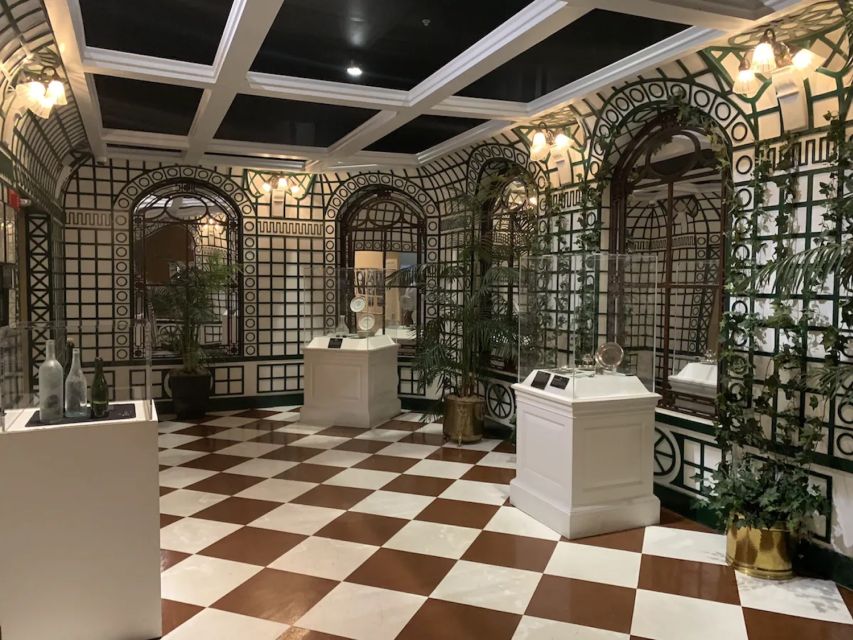
- 17 galleries in an interactive 20,000-square-foot museum make this more than a hallway of display cases.
- Full-scale room recreations let you stand where travelers once walked (or tried to).
- Touch the cold iceberg moment turns a famous story into something physical and memorable.
- Well over 300 artifacts mix authentic objects with interpretive displays so you can learn while you look.
- Little Big Piece (a 2-ton hull section) is the kind of artifact that makes the scale of recovery click.
- Museum rules matter: no photography, and mobile phones must be turned off inside.
Titanic in a Box: what the exhibition is really like
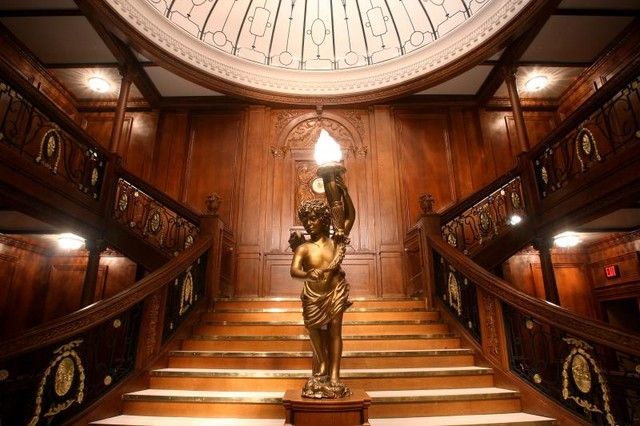
This is a ticketed day inside an interactive museum experience called Titanic: The Artifact Exhibition. The format is simple: you move through 17 galleries in a purpose-built space of about 20,000 square feet, and each area is designed to tell a slice of the ship’s story through rooms, artifacts, and guided-style interpretation.
What makes it work is the balance between the visual and the emotional. You see ship spaces recreated at full scale, and you also get historical context aimed at helping you connect objects to real lives. One minute you’re taking in a room layout; the next you’re learning about the passengers and crew connected to what you’re seeing.
The other major factor is the “real vs. recreated” mix. Some things are exact-feeling copies—Grand Staircase views, suite details, deck scenes. But the museum also includes well over 300 artifacts and historically important items recovered from the wreck. That combo helps you get the sense of the ship’s look and function without pretending the entire experience is the actual ship.
If you’re a Titanic fan, you may already know the plot. Still, the building approach here focuses on the human side and the objects—the things people used, carried, and relied on. That’s why it lands as more than a theme-park reenactment.
You can also read our reviews of more tours and experiences in Orlando



Grand Staircase and First-Class Suites: where scale does the storytelling

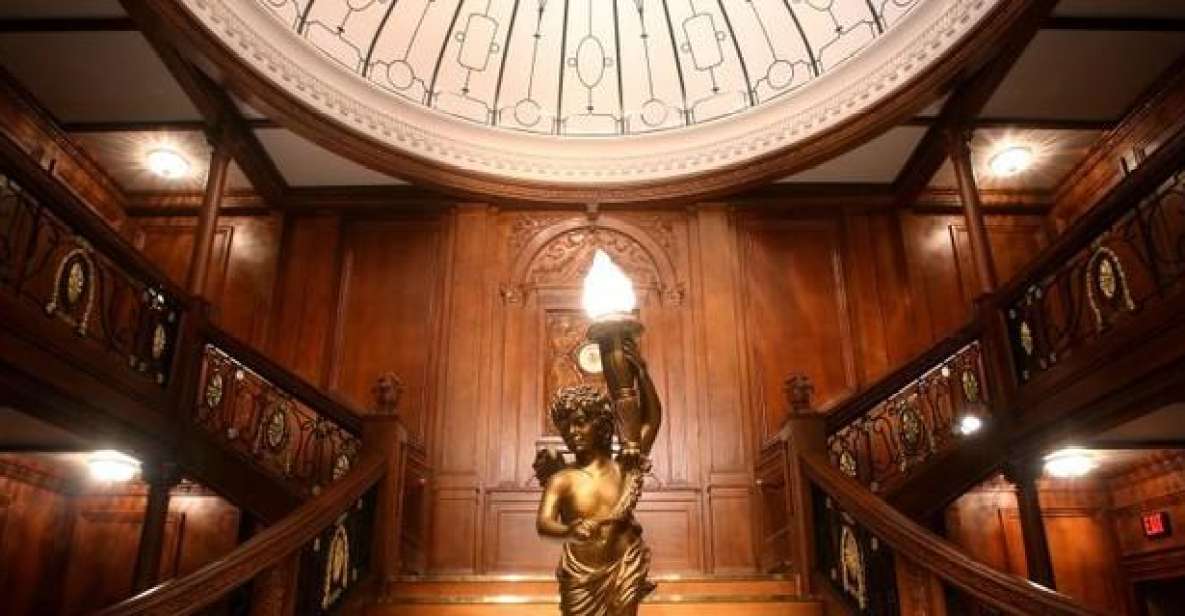
When you walk into the recreated ship rooms, the first thing you notice is how strongly the museum uses space. The Grand Staircase is a focal point, built so you can stand back and then step in close enough to study what the room is showing. It’s not just a photo op. You’re meant to treat it like a place.
The First-Class Suite adds a different layer. In a suite, your brain starts mapping comfort, routine, and the small private differences that separate classes of travel. You’re looking at a world that feels orderly and domestic, then you’re reminded—quietly and consistently—that this was still a passenger ship with a fatal outcome.
What I like about these recreations is the way they help you visualize ordinary details. People often remember Titanic as a headline, a ship silhouette in documentaries. Here, the ship becomes rooms and daily life. That matters because the exhibition doesn’t just say what happened. It tries to help you imagine how it felt for the people who lived those hours.
There’s also a practical angle: these rooms are where you’ll spend the most time if you care about design and layout. If you don’t, you might breeze past. I’d still recommend slowing down. Even one extra minute per room adds up in a place that’s built to reward attention.
Promenade Deck, stars, and the cold-ice moment
The Promenade Deck is where the experience makes its most memorable “you are here” move. The museum recreates a deck scene where you can walk out and feel the chill of the cold Atlantic air as you gaze at the stars. It’s a clever way to connect atmosphere to story.
Then comes the moment that most people don’t forget: you can touch an iceberg. The exhibition positions it as an iceberg at the same temperature as the waters from that night. Whether you take that as a scientific detail or a carefully staged effect, it still works emotionally. You can’t intellectualize cold. You have to feel it.
This is also the part where I’d calibrate your expectations. You’re not stepping onto a real deck in freezing seawater. You’re experiencing a controlled, museum-safe version of the cold and environment tied to the story. Still, the touch element is rare for history exhibits, and it’s exactly why this ticket gets a lot of love.
If you’re sensitive to cold (or you’re going with kids who might be chilly), plan for that. One reason this section stands out is that it’s physical. Dress accordingly, even if you’re coming from warm Florida weather.
What you’re actually seeing: artifacts, memorabilia, and Little Big Piece
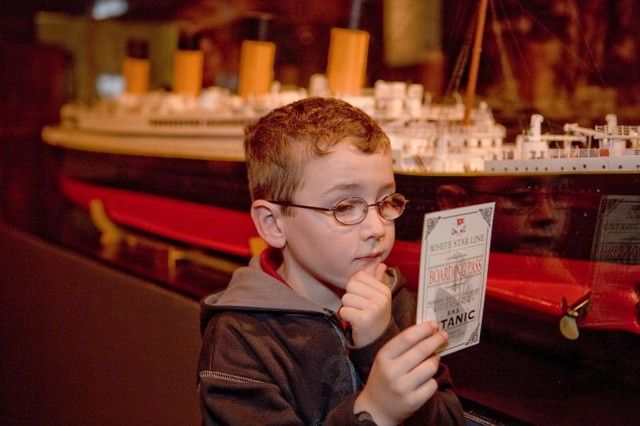
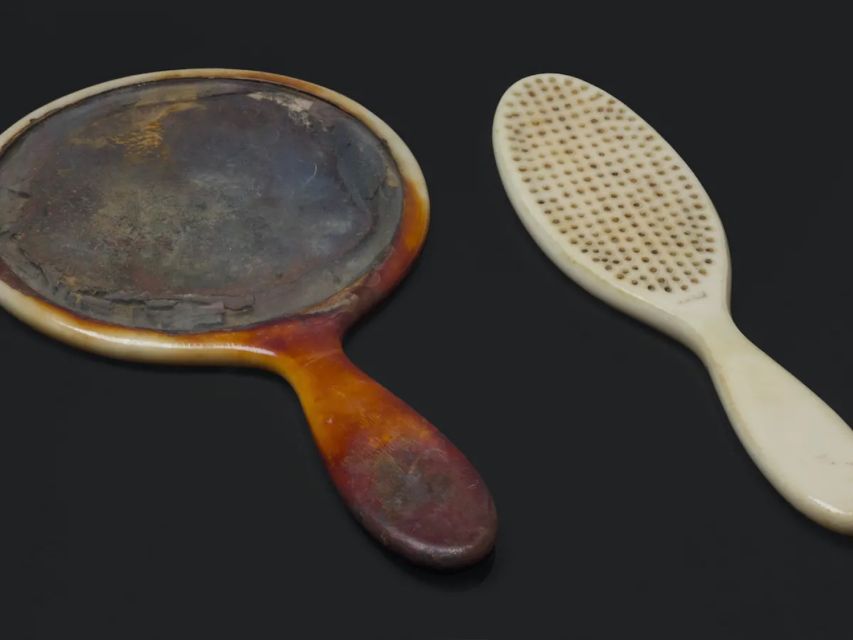
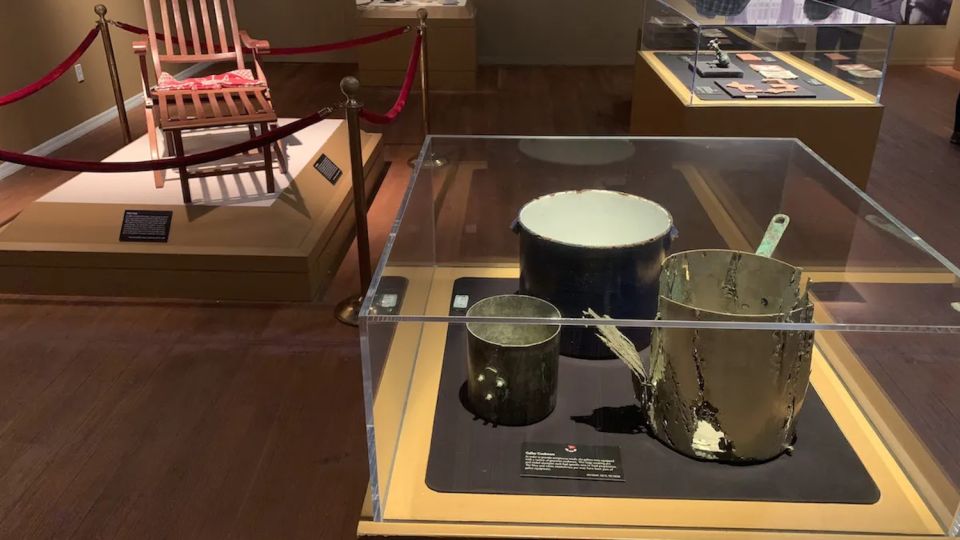
The museum doesn’t rely only on recreations. It includes well over 300 authentic artifacts and historical memorabilia, plus major elements that anchor the Titanic narrative in recovered material.
One of the key “wow” components is Little Big Piece—a 2-ton section of the hull. The museum frames it as one of the largest artifacts ever recovered from Titanic. Even if you’re not a technical history person, this kind of weight-and-scale artifact changes your internal picture of what “recovery” means. It also helps you see why certain objects matter: they were part of a real structure, not invented props.
The experience also emphasizes individual lives. Instead of just showing objects with labels, you get stories about passengers and crew. The goal seems to be making you think: what would it mean for someone to use this item, wear that clothing, or move through that space? That’s why people leave saying the exhibition feels solemn, not just impressive.
One more detail: the museum includes both authentic objects and interpretive displays. That’s good for you as a visitor because you get to learn while you’re looking, rather than just reading wall text. It also means you can treat your time like a choice: linger with the authentic items, or focus more on the staged rooms. Either way, you’ll get something worth your ticket.
Your one-day plan: how to pace a 17-gallery museum
This is labeled as valid for 1 day, and it’s designed around starting times. So you’ll want to pick a slot that matches your energy level. If you only have one day in Orlando, choose a time when you can spend a full block inside without rushing out for another reservation.
I’d plan for a visit that doesn’t feel like a sprint. Even if the museum rules limit what you can do with your hands (no photography, phone off), you can still take your time absorbing. The exhibition is built with multiple rooms and interactive elements, so your pace will change depending on what grabs you.
Here’s a practical pacing approach:
- Start with the spaces you care about most (Grand Staircase, suite recreations, Promenade Deck).
- Then circle back to artifacts and memorabilia areas where you can slow down and read.
- Leave time for the cold-ice and hands-on moment. That section tends to take longer than you think because you’ll want to do it once, then process it.
If you’re the kind of person who hates crowds, I’d also keep your visit time in mind. Timed entry can help, but start-time availability is part of the setup. The museum experience is best when you can actually see and stand in rooms without constant jostling.
You can also read our reviews of more museum experiences in Orlando






Rules you must follow: cameras, bags, phones, and what to wear
This museum is strict, and you’ll be happier if you treat it like a tech-light environment before you arrive.
Not allowed:
- Cameras and photography inside
- Food and drinks
- Luggage or large bags
- Pets (assistance dogs allowed)
Also:
- Mobile phones must be turned off inside the exhibition
That last rule is a big deal. Even if your phone is on silent, it still needs to be turned off. If you rely on your phone for directions, plan before you enter.
A bag strategy helps too. Since large bags and luggage aren’t allowed, travel light. Bring what you need for the day and keep it simple.
What should you wear? It’s Florida outside, but the experience includes a cold environment and an iceberg-touch moment. That cold can feel sharper than you expect when you’re coming in from warmth. A light layer under a jacket is a smart move. Comfortable shoes also help because you’ll be moving through multiple galleries.
Staff energy and the tone of the experience
The exhibition is built to be more than a quiet self-walk. Staff members are present and are eager to answer questions. I like that because it changes the experience from read-only to learn-through-conversation.
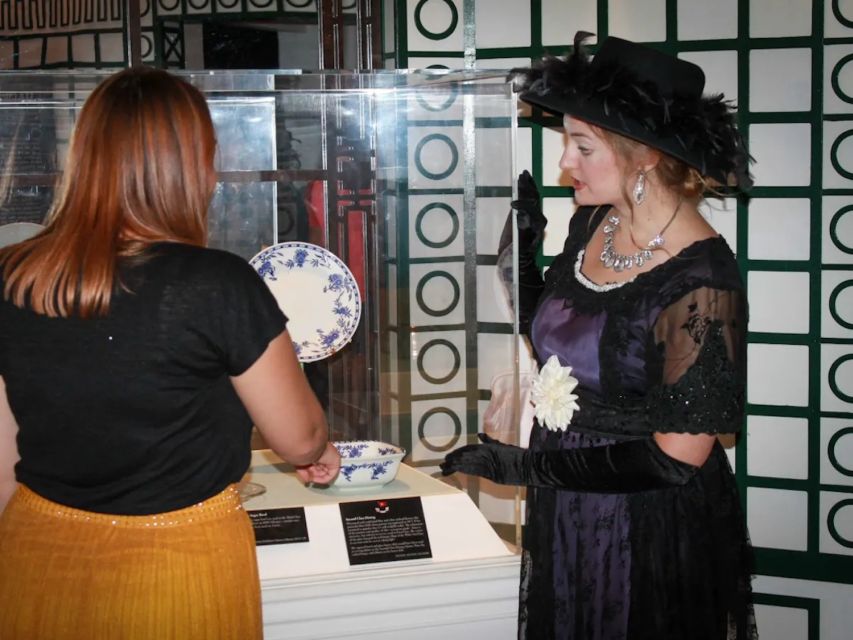
One interesting thing that shows up in how people talk about it is performance and character presence. Some visits involve staff who bring historical characters into the mix, which can add atmosphere. I’d treat that as a possibility rather than a guarantee, but if it happens while you’re there, it can make the story feel less like a lecture and more like a guided moment.
The tone overall is solemn. Even when the presentation style is engaging, you’re walking through tragedy. That’s why it’s not just entertainment. It’s educational and reflective, and it earns that reaction.
If you go expecting a theme-park version of Titanic, you might be surprised by how respectful the experience feels.
Is it worth $36? Value in time, artifacts, and hands-on moments
At $36 per person, this is not a “budget museum stop,” but it can still be a good value if you’re the right kind of visitor.
Here’s what you’re paying for, in practical terms:
- 17 galleries across 20,000 square feet
- well over 300 artifacts and historical memorabilia
- full-scale room recreations like the Grand Staircase and First-Class Suite
- a hands-on iceberg-touch experience tied to the cold-water theme
- a heavyweight artifact highlight: Little Big Piece (2-ton hull section)
If you love history you can see and touch, the ticket adds up fast. If you prefer fast, lightweight attractions with lots of quick thrills, you might find parts of the museum slower.
Also, this is a one-day admission without meals. So factor in that you’ll need to eat before or after. If you time it well, the museum becomes a centerpiece of your day rather than something you squeeze in between errands.
Who should book this Orlando Titanic ticket?
This experience is a strong fit for:
- Titanic fans who want more than just a movie recap
- History-minded visitors who care about artifacts and real recovered pieces
- People who like museum staging where rooms feel like real spaces
It may be less ideal for:
- Very young children who want constant motion and playful interaction
- Anyone who hates cold environments or doesn’t tolerate museum rules well (no cameras, phone turned off, no big bags)
If you’re traveling with teenagers, it can work well—especially if they’re curious about how people lived and what artifacts can tell you. If your group is mixed-age, you might consider how long you’ll be willing to stand and read.
Should you book this Orlando Titanic Artifact Exhibition ticket?
I’d book this if you want a focused, high-impact museum day with full-scale recreations and major artifacts, including the memorable ice-cold touch moment. It’s also a solid choice if you only have one day and you want one ticket that packs a lot into a single block of time.
I’d think twice if your main goal is to film everything. With no photography and phones turned off, you’ll spend the whole visit experiencing instead of recording. If that’s not your style, you may feel “missing out” on later sharing.
If you can handle that trade-off and you’re open to a reflective tone, this is one of those tickets that makes the story feel immediate—rooms, objects, and cold—without needing any extra add-ons.
FAQ
Where is the admission box office and where do I redeem my voucher?
Present your voucher to the admission box office at 7324 International Dr, Orlando, FL 32819, USA.
How long is this experience?
It’s listed as valid for 1 day, with availability based on starting times.
Can I take photos or use my camera inside?
No. Cameras and photography inside are not allowed.
Are food and drinks allowed in the exhibition?
No. Food and drinks are not allowed.
Do you provide transportation or meals?
No. Transportation to/from the exhibition and meals and beverages are not included.
Can I cancel and get a refund?
Yes. Free cancellation is available up to 24 hours in advance for a full refund.