REVIEW · ORLANDO
Orlando Tree Trek Adventure Park
Book on Viator →Operated by Orlando Tree Trek · Bookable on Viator
Strap on and climb above the trees. Orlando Tree Trek Adventure Park is a true ropes course in the open air: you work your way through aerial obstacles 10 to 50 feet up using a harness system, then earn ziplines and other challenges along the way. What I like most is the safety demo and equipment training before you climb, and the way the course setup gives kids and adults different levels of play. One key consideration: this is a physical obstacle workout, so plan your energy and pace, especially in Florida heat.
In This Review
- What makes this ropes course different from a basic zipline
- Key highlights you’ll feel right away
- Entering the park at Orlando Tree Trek: what happens before you climb
- A few practical things I’d plan for
- Safety first: the orientation and harness steps that make this feel trustworthy
- The treetop courses: 97+ aerial challenges across 6 lines
- Difficulty ramps up as you go
- What to expect if you’re not an extreme athlete
- Your 2–3 hour adventure: how the flow plays out in real time
- Plan around Florida heat
- Gear and clothing rules: small details that prevent big problems
- A smart packing list (based on what’s missing)
- Non-climbers: the walking trails option that keeps everyone included
- Who should book this ropes course (and who should skip it)
- Best fit
- Height reach and size requirements matter
- Consider skipping climbing if…
- Value near Walt Disney World: timing, convenience, and how to get more fun
- Course availability can vary
- Booking decision: should you book Orlando Tree Trek?
- FAQ
- How long does the Orlando Tree Trek Adventure Park experience take?
- What age and sizing requirements do you need to participate?
- What’s included with the ticket?
- Do I need to bring gloves or drinks?
- What should I wear and avoid?
- What time does the activity start and how do departures work?
- Can non-climbers participate without climbing?
- What happens if weather is bad or I need to cancel?
What makes this ropes course different from a basic zipline
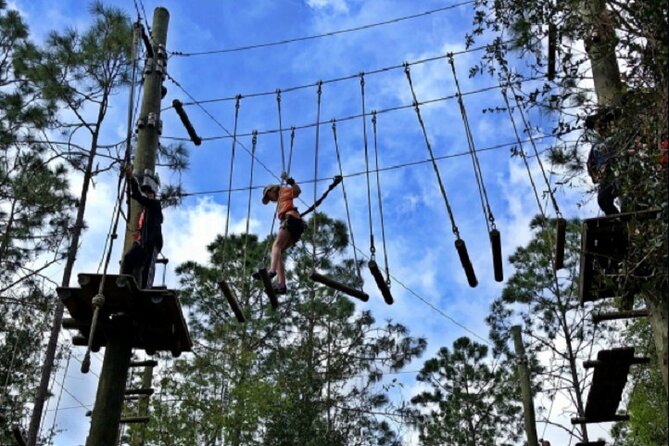
The park is built for aerial challenge, not just one big thrill. You’ll move across cargo nets, swinging logs, bridges, and wall-style obstacles, plus zipline moments and trapeze-style swings, all suspended in a pine forest. It runs like a guided safety start, then a self-paced route through several courses—so you’ll want to stay focused on your own line, follow staff directions, and not rush your body.
Key highlights you’ll feel right away
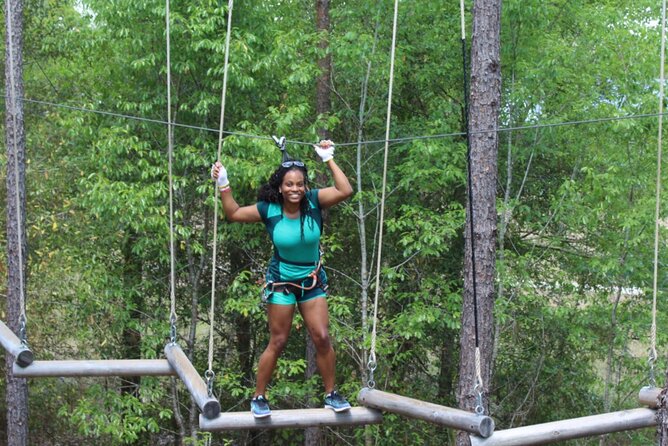
- 97+ games across 6 courses mean you’re not repeating the same obstacle
- 10 to 50 feet in the air gives that real height, without needing extreme climbing experience
- Safety orientation and a required demo course help you get comfortable fast
- Family-friendly structure for ages 7+ with progressive difficulty levels
- Small groups (max 15) keep the experience manageable and personal
You can also read our reviews of more tours and experiences in Orlando.
Entering the park at Orlando Tree Trek: what happens before you climb
Orlando Tree Trek Adventure Park is set up so you get kitted up and trained before you’re loose in the trees. Plan to arrive at your scheduled start time, because the flow depends on everyone getting through the same safety steps in order.
You’ll start with a waiver, then you’ll get harnessed. After that, you’ll do a mandatory demo course. This matters more than people expect. The demo is where you learn how the harness and connection system work, how to move between obstacles, and how to handle the basic patterns like balancing, stepping, and transferring your weight safely.
If you’re going as a group, this is also the moment you’ll notice how staff manage pace. Even with multiple courses available across the park, your best experience comes from listening closely during setup and not skipping steps just to catch up.
A few practical things I’d plan for
- You can follow along on walking trails below if you’re not climbing.
- The park is seasonal, so hours and availability can shift. Check the day you book.
- Expect that some obstacles or parts of the setup could be temporarily out of service, so your route might not be identical to what you hoped for.
Safety first: the orientation and harness steps that make this feel trustworthy
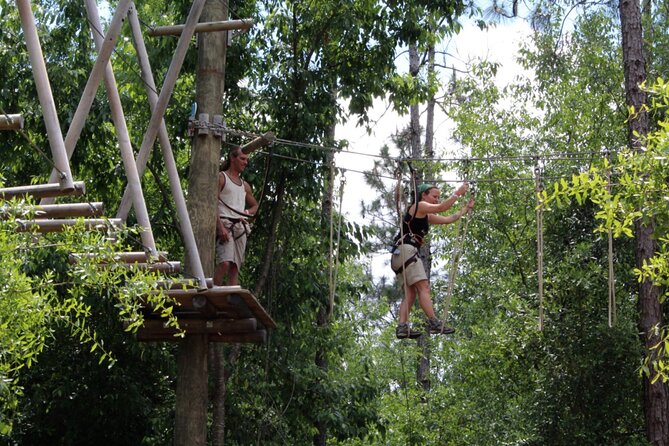
The park’s process is built around one idea: you should understand the gear before you’re up high. The safety demonstration and orientation aren’t “extra.” They’re your confidence layer.
In particular, pay attention during harness fitting and instruction on the connection points. This is where people often feel nervous at first—then feel much calmer after they understand how to clip in, move correctly, and rely on the system. Guides are consistently praised for being thorough, friendly, and clear. You might even meet someone like Ryan, Josiah, or Nick, who have been called out for being funny, well spoken, and genuinely helpful while they teach.
One more detail that’s worth respecting: the park has strict clothing rules. Those aren’t there to be annoying. They help prevent snagging and keep you safe as you move between platforms and obstacles.
The treetop courses: 97+ aerial challenges across 6 lines
Once your demo course is done, you’re directed to the first course. Then you work through challenges that progressively feel more demanding. The setup is organized by height and complexity, with obstacles suspended between 10 and 50 feet above ground.
Here’s what you’ll typically encounter:
- Cargo nets and bridges that require steady balance and careful foot placement
- Swinging logs that test timing and grip
- Zip lines that give you a moment to breathe while still keeping momentum
- Trapeze-style swings that add a different kind of challenge—more body control than you might expect
- Board-and-net style elements that mix quick movement with slower, deliberate steps
The park also uses multiple courses (6 total), so it doesn’t feel like one long loop. You’ll still notice a “pattern” to the challenge design—clip, move, balance, and transfer. But the obstacle variety keeps you from zoning out.


Difficulty ramps up as you go
A common theme is that courses start easier and get harder. One guide-level detail worth noting: the harder lines can feel like a real test of upper-body strength, and there are reports that the Red level is especially challenging. Even if you’re an athletic person, that ramp is real.
What to expect if you’re not an extreme athlete
This is where I want you to be honest with yourself. You don’t need to be a rock climber, but you do need a moderate fitness level. You’ll use your core, grip, arms, legs, and balance—often all in one obstacle.
If you’re someone who feels fear of heights, the harness system can help you move through it. People have completed every course even while admitting they’re scared. Still, you’ll progress faster if you treat it like a calm, step-by-step routine instead of a race.
Your 2–3 hour adventure: how the flow plays out in real time
Most people take 2 to 3 hours to complete the full experience. That time can feel longer in the heat, and faster when you keep a steady rhythm.
The biggest time rhythm factor is how the obstacles and groups move. The park runs departures starting 8:30 AM, then every 30 minutes, with the last departure later in the day. Verify the day-of times because season changes the schedule.
Also, while you climb at your own pace, you should still expect moments where you might pause until a staff member handles the next section. One clue from the experience: some routes involve unlocking final segments, so don’t plan your day as if you’ll sprint straight through with zero waits.
Plan around Florida heat
If you want comfort, start early. Heat is a real issue outdoors, and I’ve seen advice to get there early to avoid the worst temperatures. If you go later, bring extra patience—and do not treat the climb like something you can power through while dehydrated.
Gear and clothing rules: small details that prevent big problems
Orlando Tree Trek has very clear rules. Follow them and your experience will feel smoother. Ignore them and you risk discomfort, delays, or being unable to participate.
Key rules you should plan around:
- No open-toed shoes
- Avoid loose clothing and jewelry
- Tie hair back
- There’s a 44-inch waist or smaller requirement (this one matters for younger kids and smaller teens)
Also note: gloves and drinks are not included. That doesn’t mean you can’t do it without them, but it does mean you should prepare for grip comfort and hydration. Many people recommend buying gloves on site and grabbing water ahead of time so you aren’t scrambling later.
A smart packing list (based on what’s missing)
Bring what will keep you comfortable for a full-body workout:
- Closed-toe athletic shoes with good grip
- A water bottle (if you plan for purchasing there, still budget time)
- Sunscreen and bug spray (especially if you’re sensitive)
- Gloves, if they’re available for purchase at the park
Non-climbers: the walking trails option that keeps everyone included
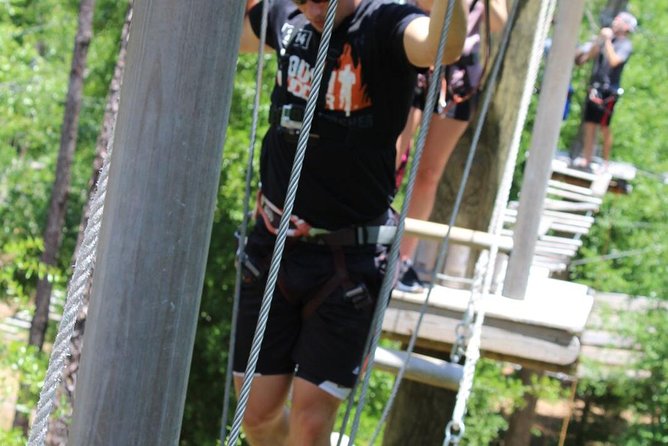
Not everyone in your group has to climb. The park provides walking trails below, so people who don’t want to participate can watch from the ground.
This is a good option for:
- Parents who want to keep their child company while they climb
- Older siblings who aren’t ready yet
- Anyone who wants to see how the obstacle flow works before committing
It also keeps group energy positive. Instead of waiting in a parking lot, you’ll stay part of the day.
Who should book this ropes course (and who should skip it)
This is one of those activities that works best when you match the park’s style: active, outdoors, and focused on safety systems.
Best fit
- Families with kids age 7 and up
- Teens who want an adrenaline workout but not a theme-park queue marathon
- Adults who want a true physical challenge near Walt Disney World
- Anyone who likes outdoors and doesn’t mind pushing through discomfort
Height reach and size requirements matter
There are height reach requirements listed for different age groups, plus the waist rule. If you’re planning for a child or smaller teen, double-check both. Even if someone is excited, a requirement mismatch can stop participation.
Consider skipping climbing if…
- You’re worried about a physical, upper-body-focused workout
- You have concerns about heights or balance, even with a harness system
- Your group relies on one person being able to move slowly without triggering frustration (the route works best when everyone follows instructions and keeps a calm pace)
Value near Walt Disney World: timing, convenience, and how to get more fun
The park is located in the Walt Disney World Resort area, and that convenience is a real part of the value. You’re not commuting far, and it can fit into a broader Orlando plan as an active break from theme-park rides.
Small group size also helps. With a maximum of 15 travelers, you generally don’t feel swallowed by a crowd.
To get the most out of your time:
- Start earlier if you can to reduce heat stress
- Bring gloves and plan hydration
- Make sure everyone knows the clothing rules before you arrive
- Expect the experience to be paced by safety flow, not by your schedule pressure
Course availability can vary
On some days, certain course sections may be out of service. Usually you still get plenty to do, but it can affect whether you get every single highlight you imagined.
Booking decision: should you book Orlando Tree Trek?
If you want a hands-on, high-energy activity where you climb, balance, and solve obstacle challenges, Orlando Tree Trek is a smart pick. The safety training, the variety of obstacles (not just one zipline moment), and the progressive difficulty make it a strong value for a mixed group of ages.
Book it if:
- You’re comfortable with a 2–3 hour outdoor workout
- Your group can follow clear safety and clothing rules
- You want something near Disney that feels like a real adventure
Maybe skip or rethink if:
- Your group needs an easy, low-effort activity
- Someone in your party doesn’t meet the waist/height requirements
- You’re traveling with limited flexibility and can’t adjust to the pace of safety setup
FAQ
How long does the Orlando Tree Trek Adventure Park experience take?
Most full course visits take about 2 to 3 hours to complete.
What age and sizing requirements do you need to participate?
The minimum age is 7 years old. There’s also a 44-inch waist or smaller requirement, plus height reach requirements listed for children (4’7), youth (5’9), and adult/seniors (5’11).
What’s included with the ticket?
Your ticket includes the climbing equipment and the demo course.
Do I need to bring gloves or drinks?
Gloves and drinks are not included. It’s a good idea to plan for both since hydration and grip comfort matter on a full-body obstacle route.
What should I wear and avoid?
You must not wear open-toed shoes. You should avoid loose clothing and jewelry, and you’ll need to tie hair back.
What time does the activity start and how do departures work?
Departure times begin at 8:30 AM and run every 30 minutes through the last departure of the day. Hours can vary by season, so verify the schedule for your date.
Can non-climbers participate without climbing?
Yes. If someone doesn’t want to climb, they can follow along on walking trails below.
What happens if weather is bad or I need to cancel?
The experience requires good weather. If it’s canceled due to poor weather, you’ll be offered a different date or a full refund. You can cancel for a full refund up to 24 hours in advance; within 24 hours, refunds aren’t available.