REVIEW · WILD FLORIDA AIRBOATS GATOR PARK
Orlando: Drive-Thru Safari Park at Wild Florida
Book on GetYourGuide →Operated by Wild Florida Airboat Tours · Bookable on GetYourGuide
Safari viewing from your own windshield beats the line. Wild Florida in Orlando turns a normal animal park into a self-guided drive-thru with a posted 5 mph speed limit, plus you’ll spot 100+ native and exotic animals roaming in open space.
You also get Gator Park admission, including an alligator pond and the chance to meet Crusher, the largest alligator they highlight. One thing to keep in mind: this is built for freedom and pacing, not nonstop narration—so if you want a lot of guided talking, you may rely on your own curiosity and the on-site info instead.
In This Review
- Key points to know before you go
- Orlando’s best feature is control: your car, your pace
- Getting there the right way: own vehicle is a must
- The drive-thru safari loop: gravel paths and real open-space viewing
- Giraffe feeding: the highlight moment (and how to plan for it)
- Gator Park and Crusher: the alligator pond area
- How long to plan: a realistic 1-day schedule
- What you’ll see besides the headlines (and what might disappoint)
- Who this Orlando safari day is best for
- Price and value: is $35 worth it?
- Should you book Wild Florida’s Drive-Thru Safari Park?
- FAQ
- Do I need my own vehicle for the drive-thru safari?
- Is the drive-thru safari self-guided?
- What’s included in the ticket price?
- What is not included?
- How much does it cost?
- How long is the experience?
- Can I feed the giraffes?
- Are pets allowed?
- Is wheelchair access available?
- What’s the cancellation policy?
Key points to know before you go
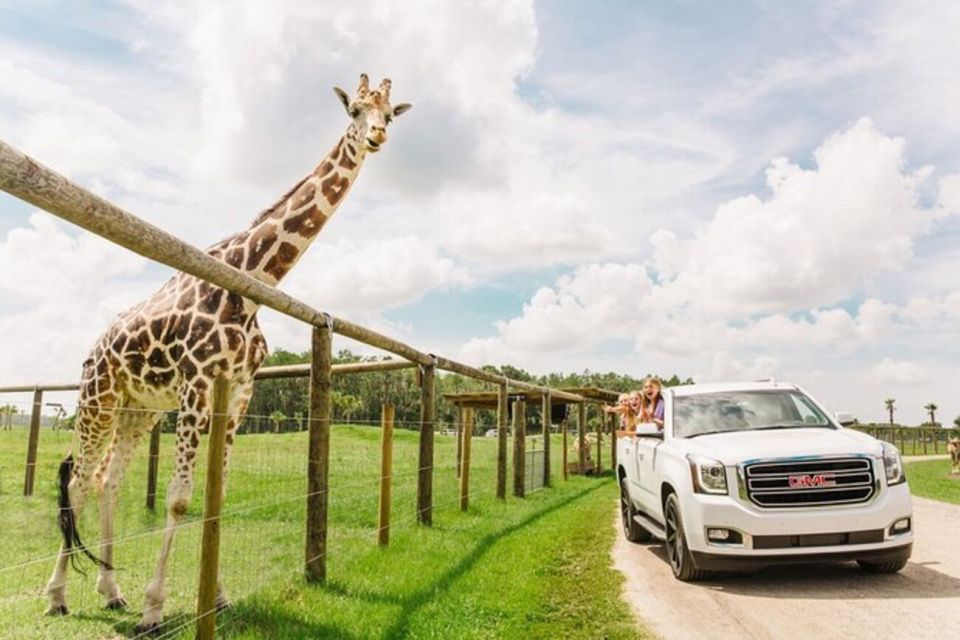
Self-guided drive-thru in your own vehicle at a slow 5 mph pace for safer animal viewing and easy photos.
100+ roaming animals including white-tailed deer, bison, cracker cows, zebras, watusi, and oryx.
Hand-feed giraffes (feed is not included, but it’s a major highlight of the day).
Gator Park alligator pond plus a standout alligator they call Crusher.
You need your own car—this is not a guided bus-style tour.
No pets allowed in the park.
Orlando’s best feature is control: your car, your pace
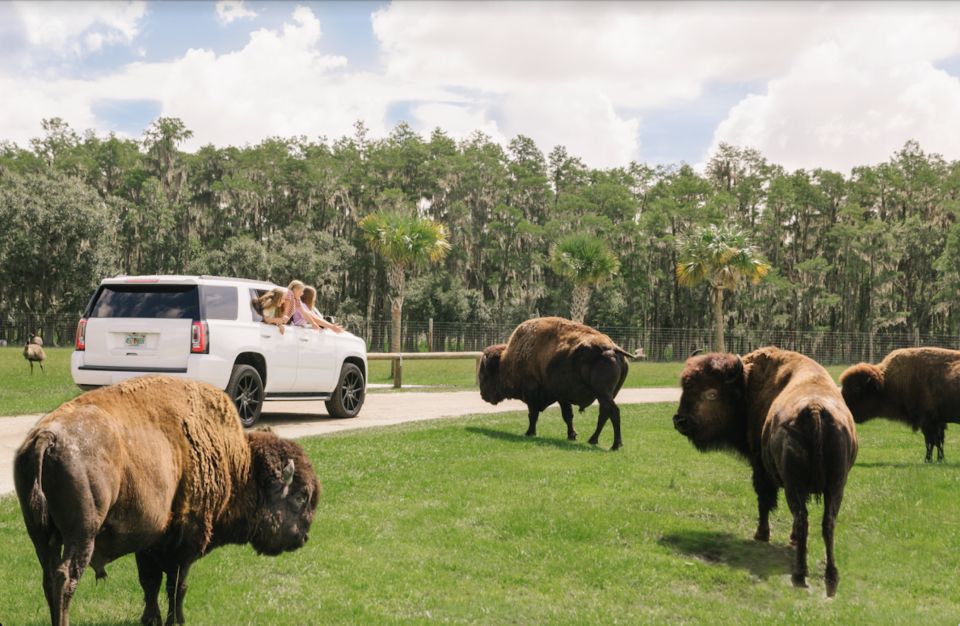
This is the kind of attraction that feels smarter than a typical zoo plan. Instead of herding yourself through crowds at someone else’s schedule, you’re driving through the park at your own speed. The posted 5 mph limit is more than a rule. It actually changes the experience: you can slow down when you spot something, take photos without rushing, and wait when animals cross the road.
I like that it mixes “safari energy” with practical comfort. You’re in your own car, so you’re protected from the sun when you need a break and you can keep your day moving without waiting around for groups to re-form. Many people do this as a family outing, and it works because the pacing is naturally flexible for kids, grandparents, and anyone who gets tired of standing in line.
The only downside is the tradeoff: because it’s self-guided, you’ll get more out of it if you bring curiosity. You might want to look closely at what’s beside you (and not only what’s in front). There’s also no mention of a required guided script on the drive itself, so you’ll have to read what you can and ask staff questions when you’re stopped.
Getting there the right way: own vehicle is a must
The park is set up for one simple reason: you must have your own vehicle. That’s not a small detail. It affects your planning, especially if you’re staying in the Orlando tourist zone and you’re thinking you’ll just hop in a rideshare.
If you’re driving in from International Drive, many people report it can be about a 2-hour drive without tolls—construction can stretch things out. My practical advice: build in extra buffer time, because the day is more fun when you’re not rushing your arrival window.
Once you’re inside, the navigation is mostly straightforward because the whole point is the drive-thru loop across gravel paths. Still, slow down when you’re approaching animal areas or feeding stations. The park sets a safety pace, and animals do what animals do—walk, linger, wander right when you think they won’t.
The drive-thru safari loop: gravel paths and real open-space viewing
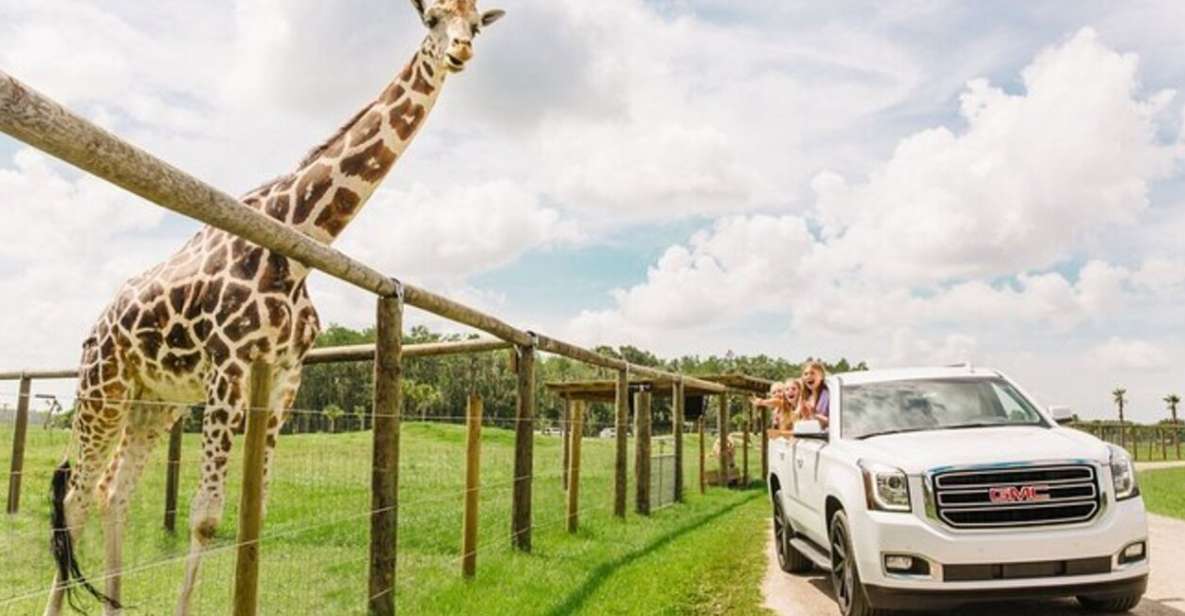
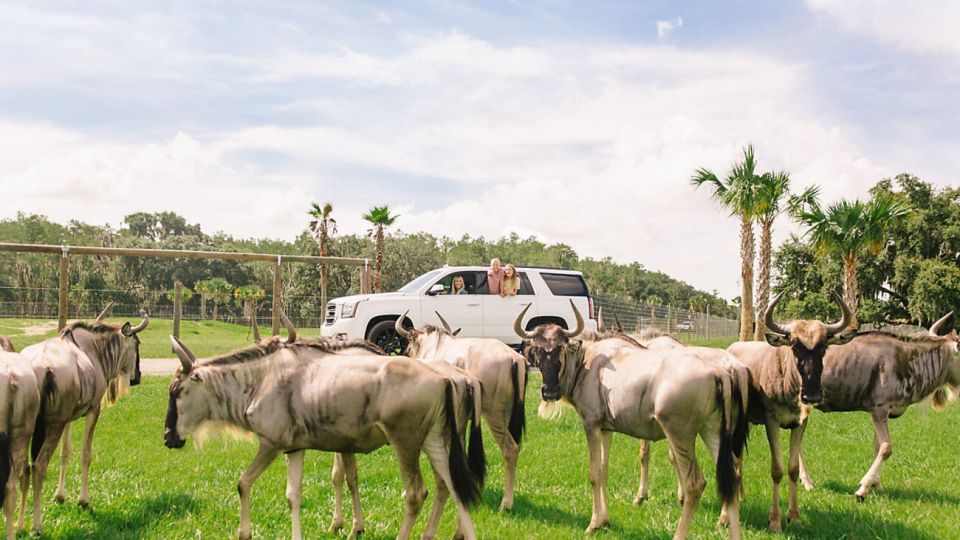
The heart of the day is the drive-thru safari. You’ll cruise down gravel paths across open areas of the park, where more than 100 animals live freely. The vibe is less about seeing animals behind bars and more about watching them behave naturally—grazing, roaming, and using their space the way they want.
You should expect a mix of animal types, including white-tailed deer, bison, cracker cows, zebras, watusi, and oryx. That variety matters. It keeps the drive from feeling repetitive, and it gives you different photo opportunities: some animals are calm and close to the road, while others keep more distance and force you to watch and wait.
A smart way to enjoy it is to treat it like slow sightseeing, not a checklist. When you see movement off to the side, you’ll usually get your best results by parking your attention there for a moment. The 5 mph pace makes that possible. You can take your time, line up shots through the car window, and even plan little stops where you see animals gathering.
Based on visitor experiences, the drive-thru can take around two hours when you’re actually looking and taking photos. If you’re traveling with kids, or if you get excited by every new species, you might spend longer—and that’s the point. This is one of those days that rewards patience.
Giraffe feeding: the highlight moment (and how to plan for it)
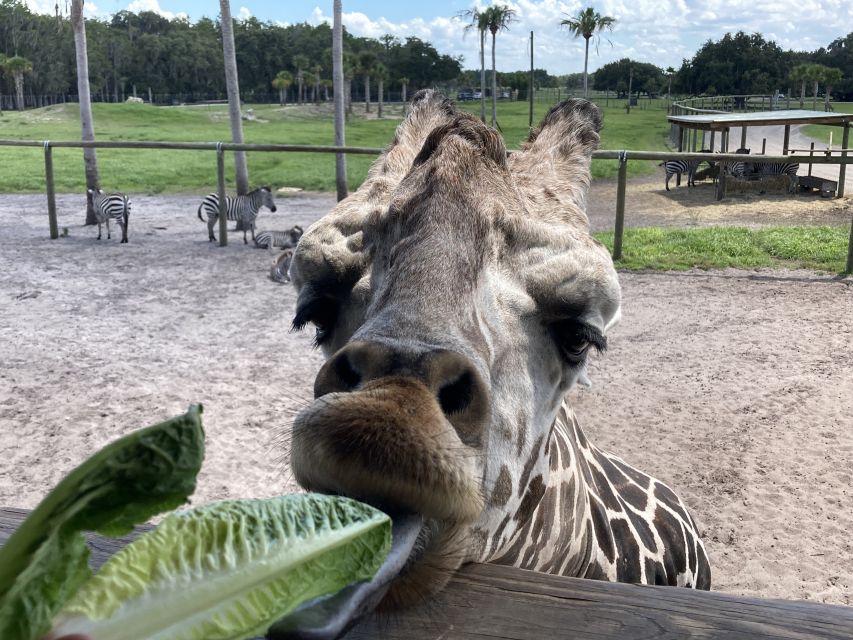
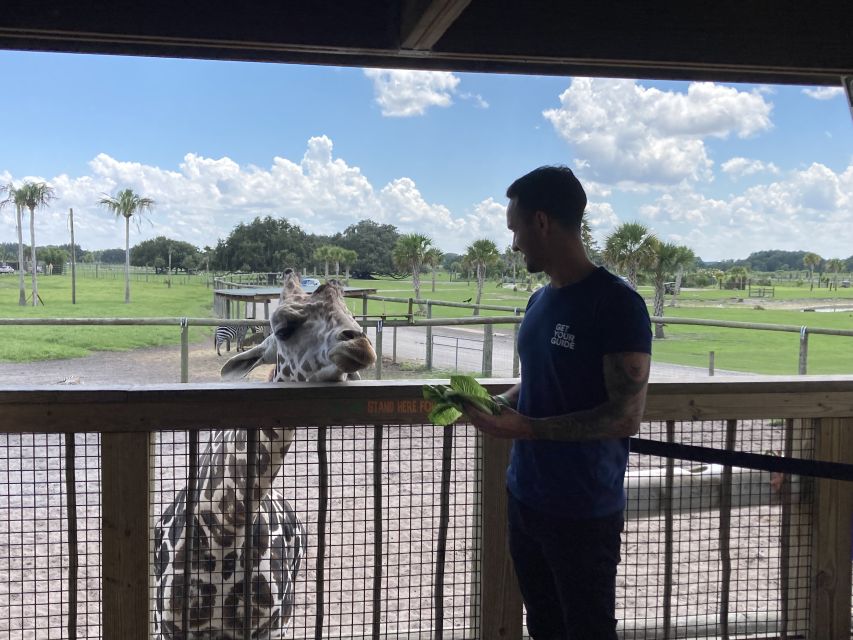
Feeding the giraffes is the part that people remember long after the drive is over. The park makes it a hands-on experience, and it adds a real “wow” factor because you’re close enough to see their behavior up close.
Here’s the practical bit: giraffe feed is not included in your admission. So if you want this to be a sure thing, check on-site pricing and plan a little extra budget. If you’re traveling with multiple people, it’s worth doing the math early so no one is disappointed when they’re ready for the feeding moment.
Also, think about expectations. Some visitors note that not every giraffe is eager at every moment, and one feeding station can end up being a quick turn for one animal at a time. That doesn’t ruin the experience. It just means your best strategy is to stay calm and treat it like an interaction, not a guaranteed grab-and-go snack service.
If you’re traveling with younger kids, this is a great emotional payoff. Even adults who claim they’re not animal people often soften when a giraffe leans in and you can actually see how it eats and moves.
A name you’ll hear associated with the giraffe feeding experience is Leroy, mentioned by visitors as a sweet giraffe at the park.
Gator Park and Crusher: the alligator pond area
After the drive-thru, you’ll transition into Gator Park. This is where the day pivots from safari roaming to alligator watching, and it’s also where the park’s style feels more like a traditional attraction—set paths, a dedicated alligator area, and time to slow down.
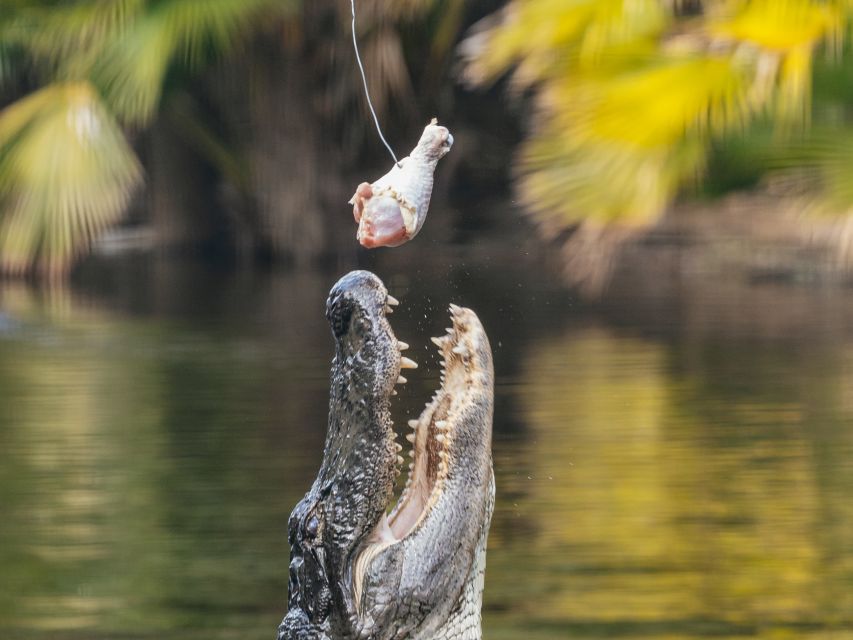
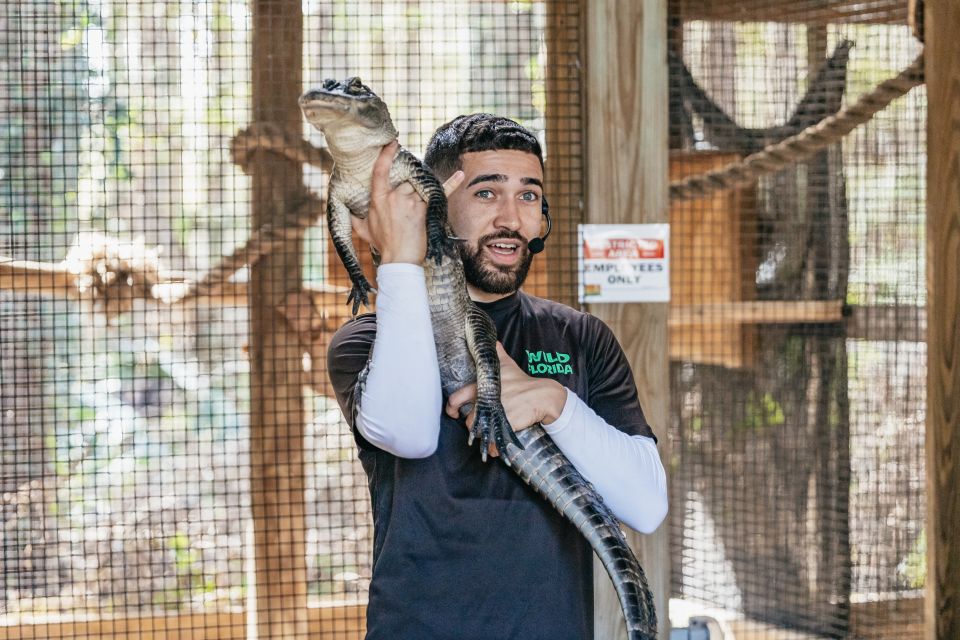
The park has a massive pond dedicated exclusively as a home for its alligators. That matters for the viewing experience. You’re not looking at a tiny tank. You’re watching a larger habitat-style area where the animals can move and surface at their own rhythm.
One of the standout details is Crusher, described as the largest alligator in the park. That gives you a mental anchor while you’re walking around—like, okay, I know what I’m hunting for next.
Even if you’re not an alligator superfan, you’ll probably enjoy the viewing because the action tends to be visual: watching heads pop up, watching movement on the water, and catching the moment something stirs. Visitors also describe the park as entertaining to watch, including for people who don’t normally care about gators.
If you’re hungry, plan to eat during your Gator Park time. On-site options are available (including a grille and snack spots noted by visitors). Since food and drinks are not included in the base admission, it’s smart to bring water or plan where you’ll purchase it.
How long to plan: a realistic 1-day schedule
The ticket is valid for 1 day, but your enjoyment depends on how you schedule your time once you’re there. Many visitors recommend planning at least a half-day to a full day depending on how much you linger, and some suggest 3–4 hours for a satisfying visit.
Here’s a practical way to structure your day once you arrive:
- Start with the drive-thru while you can still focus on the animals without rushing.
- Keep enough time afterward for Gator Park walking and viewing.
- Build in extra minutes for photos, rest breaks in shaded areas, and letting kids decompress.
Speed matters less than flow. You’ll likely move from one area to the next, but it’s the stops that add up. If you’re traveling in hot weather, give yourself permission to slow down. It’s easier to enjoy animals when you’re not baking.
A timing note from visitor experiences: if you’re heading over during busy periods or you hit road construction, your arrival can shift later than expected. So don’t pack this day too tightly with other Orlando plans.
What you’ll see besides the headlines (and what might disappoint)
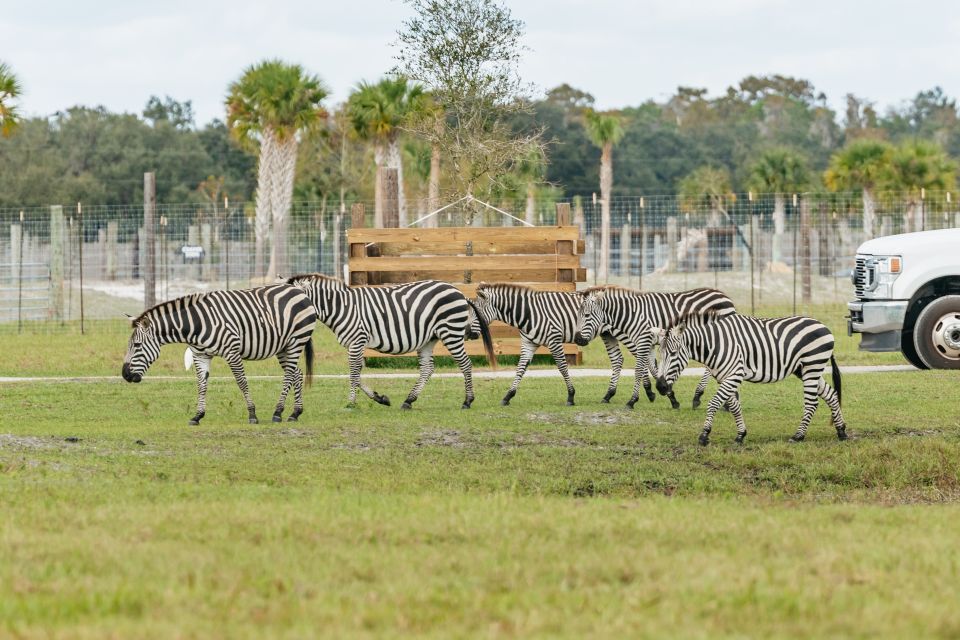
The official highlights focus on the biggest moments: 100+ animals, giraffe feeding, and Crusher in Gator Park. In practice, the variety is what makes the drive-thru feel like an actual safari, because you don’t just see one or two species in repeated patterns.
You might spot animals like:
- White-tailed deer
- Bison
- Cracker cows
- Zebras
- Watusi
- Oryx
And you’ll be watching them in open spaces rather than tightly confined exhibits.
That said, it’s important to be honest about expectations. Some visitors want more animals or more variety than they experienced on their drive, and a couple of comments suggest the drive can sometimes feel like a lot of similar farm-type animals rather than constant surprises. In other words, the drive is great, but it’s not a guarantee that every minute will be a new wow species.
If you’re the type who needs constant educational explanation, you may also feel like you want more on-the-ground info. One person wished for things like a radio station naming animals. That’s a sign that the experience is more about your own observation than a guided narration marathon.
On the other hand, if you’re happy to slow down, scan closely, and ask staff questions when you stop, you’ll probably feel the value quickly.
Who this Orlando safari day is best for
This experience fits families well because it’s low-stress. The drive-thru setup works for kids who can get restless in lines, and it works for adults who don’t want to feel stuck behind other visitors.
It also suits people who like being in control of pacing. You can stop when you want photos, you can take extra time when animals linger near the road, and you can move on when you’ve seen what you came for.
If you’re an animal lover who appreciates open-space viewing, you’ll likely enjoy the roaming vibe. If you’re someone who expects lots of guided talk or super structured interpretation, you might enjoy it a bit less—but you can still get a lot out of the giraffe feeding and the alligator pond.
One more practical note: pets are not allowed. So plan for that if you’re traveling with animals.
Price and value: is $35 worth it?
At about $35 per person, the price can feel like a steal or like a gamble, depending on what you expect.
Here’s the value logic: your admission covers both the drive-thru safari and Gator Park. That’s two separate experiences in one outing—so you’re not paying once and getting only a short loop. The giraffe feeding itself is not included, and food/drinks are not included either, so the real cost for your day may rise a bit if you choose the feeding and snacks.
Still, even with a few add-ons, it tends to work out well for families because you’re avoiding the typical “pay for parking and pay again for lines and pay again for forced pacing” feeling you can get at larger theme parks. You’re paying for time in open space, plus a rare hands-on moment with giraffes.
My take: if you have your own vehicle and you can spend a few hours actually looking, it’s a strong value. If you only have 45 minutes and you want constant narration, it may feel overpriced. But for the right mindset, $35 can go a long way.
Should you book Wild Florida’s Drive-Thru Safari Park?
Yes, if you want an Orlando-area animal day with open-space viewing and the freedom to take your time in your own car. The drive-thru at 5 mph, the chance to see 100+ animals roaming, and the giraffe-feeding moment are exactly the kind of “worth it” experiences that don’t require fancy planning.
I’d hesitate only if you’re expecting a highly guided, nonstop commentary style tour. This one runs on your pacing. If you’re okay watching closely and reading what’s posted (and asking questions when you stop), you’ll probably have a great day.
FAQ
Do I need my own vehicle for the drive-thru safari?
Yes. You must have your own car or vehicle for this experience.
Is the drive-thru safari self-guided?
Yes. It’s a self-guided tour through the open areas of the park.
What’s included in the ticket price?
The ticket includes drive-thru admission and Gator Park admission.
What is not included?
Food and drinks are not included, and giraffe feed is also not included. Rental cars are not included.
How much does it cost?
The price listed is $35 per person.
How long is the experience?
It’s valid for 1 day. Many people plan several hours to take their time through both areas.
Can I feed the giraffes?
Yes, hand-feeding the giraffes is part of the experience. Giraffe feed is not included, so you may need to purchase it on site.
Are pets allowed?
No. Pets are not allowed.
Is wheelchair access available?
Yes, the experience is wheelchair accessible.
What’s the cancellation policy?
Free cancellation is available up to 24 hours in advance for a full refund.
If you want, tell me your travel month and whether you’ll have a rental car. I can suggest the best time of day to go to help you avoid the hottest periods and build a realistic hour-by-hour plan.