REVIEW · ORLANDO
Ghost Hunt in Orlando: Quest Experience
Book on Viator →Operated by Questo · Bookable on Viator
Orlando gets spooky with a phone clue hunt. This Quest Experience turns a stretch of downtown into a walking story about the living and the dead, with you solving clues at landmarks at your own pace. It’s private, so you’re not stuck waiting on a group pace.
I like the practical setup: you start at the Chinese Pagoda (easy to find at street level), then the app gives directions to each next stop. I also like the value angle—most locations are listed as free for the challenge, so your main cost is the game itself, not attraction tickets.
The main thing to consider is potential navigation trouble. Some feedback points to outdated or incomplete clue locations, plus app directions that can get messy—especially around nighttime conditions and areas with obstructed views.
In This Review
- Key things worth knowing
- What This Orlando Ghost Hunt Feels Like (Clues, Not a Lecture)
- Price and Timing: Is $7.19 Actually Good Value?
- Getting Oriented: Chinese Pagoda to Lake Eola Without a Tour Guide
- Walk the Clues: Your Stop-by-Stop Downtown Route
- Stop 1: 566 E Robinson St (Chinese Pagoda)
- Stop 2: Muse of Discovery
- Stop 3: Orange County Regional History Center (Orlando History Museum area)
- Stop 4: Wall Street Plaza
- Stop 5: Historic Angebilt Hotel
- Stop 6: Kress Building
- Stop 7: Hamburger Mary’s
- Stop 8: Church Street Station (Ceviche – Church Street Station)
- Stop 9: 13 W Pine St (Elijah Hand Building)
- Stop 10: Rogers Building (Florida)
- Stop 11: Lake Eola Park
- Stop 12: Finish at Orlando Reeves Marker (near Lake Eola Pagoda)
- Nighttime Footing and Navigation Reality
- Who This Is Best For (And Who Might Skip It)
- Practical Tips That Keep the Game Fun
- Should You Book This Orlando Ghost Hunt?
- FAQ
- Where does the ghost hunt start?
- Where do I finish?
- How long does the Quest Experience take?
- Is there a tour guide with this experience?
- What’s included in the ticket price?
- Are attraction entry tickets included?
- Can I go at my own pace?
- Is this experience private?
- What language is the experience in?
- Can I cancel for a refund?
Key things worth knowing

- Self-paced private game: no tour guide schedule, just you and the clues
- Start at the Chinese Pagoda: clear meeting point for kicking things off
- A downtown loop with 12 stops: multiple landmarks strung together into one story
- Mostly free stops, with one paid-entry possibility: one site lists admission as not included
- 24/7 customer support: help is available if the app or story gets stuck
What This Orlando Ghost Hunt Feels Like (Clues, Not a Lecture)

This isn’t a sit-and-listen ghost tour. It’s a phone-based game in English where you follow a story thread, solve challenges, and move stop to stop as the narrative unfolds. The tone leans “mystery + spook,” with an emphasis on problem-solving rather than jump scares.
Because it’s a private game for only your group, you can go slow when a clue requires extra looking, or quick when you’re confident you found the right spot. That flexibility matters in Orlando, where heat and crowding can turn “quick tours” into slow slogs.
I also appreciate the intention behind the route. The stops are not random—you pass through real downtown landmarks and street corners, so the spooky angle feels like a fun layer on top of a normal walking area.
You can also read our reviews of more tours and experiences in Orlando.



Price and Timing: Is $7.19 Actually Good Value?
At $7.19 per person, you’re paying for access to the game (the Quest/Questo experience) rather than a guided service. For that price, the deal is simple: you get a storyline, app directions, and a structured walk through a cluster of sites.
The timing range—about 45 minutes to 1 hour 15 minutes—fits well for a low-commitment activity. You can slot it before dinner, after a museum visit, or as a change of pace from theme parks and big-ticket tours.
The “private” part can also make the value feel better. If you’re traveling with friends or family, you’re not paying to hire a person to guide you through the same route. You’re paying for an experience you can run at your own tempo.
One caution on value: if the app navigation or clue placement isn’t working as expected on your device, the cost can feel less fair. So if you hate tech friction, plan for patience—or consider doing it earlier in the day when you can see better.
Getting Oriented: Chinese Pagoda to Lake Eola Without a Tour Guide
Your job here is mostly navigation and observation, guided by your phone. The meeting point is 566 E Robinson St, Orlando, FL 32803, where you’ll start at the Chinese Pagoda. From the very first stop, the app provides your first clue and then points you toward the next location.
This is a good design choice for new visitors: you’re not trying to guess where the story begins. Instead, you start at a landmark where “meeting up” is straightforward.
Because there’s no tour guide, you’ll rely on the app for timing and directions. That makes a charged phone and a steady signal pretty important in real life. If you hit a snag, the good news is that 24/7 customer support is offered, so you’re not trapped in silence.
And one more practical thought: multiple clue hunts can cause decision fatigue if you’re juggling devices. If you have a team doing the game at the same time, it’s easier to avoid confusion when everyone focuses on one functioning phone setup rather than passing around devices.
Walk the Clues: Your Stop-by-Stop Downtown Route

This Quest Experience is built like a story walk through 12 stops. Each stop follows the same basic rhythm: you get a clue, you solve a challenge, and the app moves you forward. At several points, you can linger as long as you want, which is helpful if you’re trying to confirm you’re looking at the right details.
Stop 1: 566 E Robinson St (Chinese Pagoda)
You begin at the Chinese Pagoda, and you’re given your first clue to solve the opening challenge. The big practical win: you’re oriented right away, and the clue then leads to the next stop.
Drawback to keep in mind: if the clue area seems incomplete or partly obstructed, don’t assume you’re hopeless—pause, scan around the pagoda area, and re-check what the app is directing you to. Some feedback has mentioned missing or hard-to-see pieces at the first location.



Stop 2: Muse of Discovery
Next you’ll move to the Muse of Discovery statue. Again, you get a new clue to tackle, but you’re also allowed to pause and explore. This stop is less about rushing and more about reading the scene carefully and taking your time.
If you’re someone who likes to look for small details, this is a good moment to slow down. If you’re someone who hates lingering outdoors, you might want to keep your pace steady so the game doesn’t feel like it’s dragging.
Stop 3: Orange County Regional History Center (Orlando History Museum area)
This is the one stop where the listing flags admission ticket not included. You’ll receive your clue for the challenge here, but the reality is you may need to think about whether the clue requires paid entry to certain areas.
Practical advice: check what you’re doing at this stop before spending money. If you’d rather not pay extra, look for a solution path that doesn’t force you into paid zones. If you do want to enter, this can add a little time and cost to your overall game.
Stop 4: Wall Street Plaza
At Wall Street Plaza, the app gives the next clue and keeps you moving. This kind of stop is often where city texture matters—signage, buildings, and layout can help you match what you see to what the story wants.
Because it’s an outdoor/urban setting, you’ll likely feel less “inside” the story and more like you’re piecing it together by scanning your surroundings.
Stop 5: Historic Angebilt Hotel
Next up is Historic Angebilt Hotel. This is the type of place where architecture and entrance placement can be useful clues. It’s also a nice break from the most obvious photo spots, since the story framing makes you look at details you might otherwise ignore.
If you’re sensitive to heavy walking, you might want to keep your pace brisk here and save “extra time” for later stops where you can linger more comfortably.
Stop 6: Kress Building
At the Kress Building, you’ll get another clue and solve the next challenge. Kress is one of those downtown landmarks that looks photogenic even when you’re not trying, which can make the clue process less frustrating—your brain gets a familiar “target.”
In general, stops like this work best when you stop moving long enough to compare what’s around you with what the app expects.
Stop 7: Hamburger Mary’s
The next stop is Hamburger Mary’s. This is a fun contrast point. Instead of purely “museum or monument,” you’re in a lively, real-world commercial area, and the story uses that setting to keep things from feeling repetitive.
If you prefer quieter scenes while playing, plan a slightly earlier time window. If you like busy energy, you’ll probably enjoy the change of pace.
Stop 8: Church Street Station (Ceviche – Church Street Station)
At Church Street Station (listed alongside Ceviche), you’ll receive the next clue. This stop benefits from easy public visibility—stations and platforms usually offer more obvious structure to orient yourself.
This is another place where you can benefit from taking a few steps back and checking sightlines. That matters because some people have reported that foliage or angles can make clue-relevant parts harder to see.
Stop 9: 13 W Pine St (Elijah Hand Building)
Now you’re at 13 W Pine St, tied to the Elijah Hand Building. Street-address stops can be straightforward: once you recognize the building, the clue becomes a “match what you see” exercise.
The trick is not to rush past the area and assume you’ve already got it. Slow down enough to confirm the building matches the location the app is pushing you to.
Stop 10: Rogers Building (Florida)
Next: the Rogers Building (Florida). Like other landmark stops, this is where the story probably wants you to notice details that aren’t the main photo angle. Your best move is to scan first, then zoom in.
If you’re doing this on a phone with shaky GPS, stay calm. Don’t sprint to the next spot until you’ve confirmed you’ve fully checked the immediate surroundings.
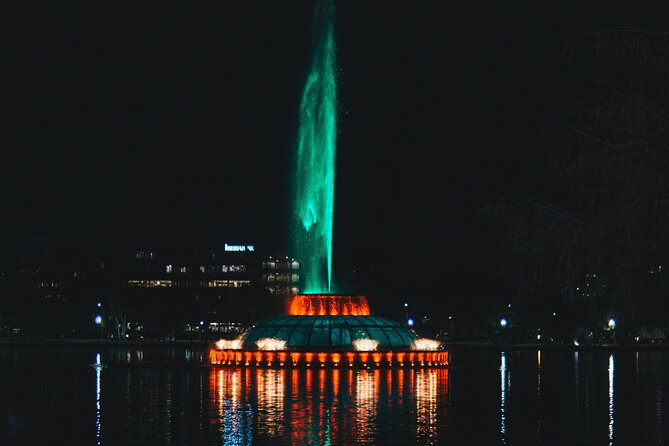
Stop 11: Lake Eola Park
Then you reach Lake Eola Park. This is a big mood shift, because by now the story has pulled you through a walking circuit, and the park setting gives you space.
If your feet or attention are getting tired, this is a good place to reset. You’ll still get a clue and move forward, but the environment tends to make it less stressful to slow down.
Stop 12: Finish at Orlando Reeves Marker (near Lake Eola Pagoda)
You finish at Orlando Reeves Marker. The listing also points you toward Lake Eola Pagoda as the end area, so think of this as a “Lake Eola finish zone” where story and city exploration end.
Once you reach the marker, you’re done with the ghost storyline. It’s a nice capstone because it ties the end of the game to a recognizable Orlando landmark.
Nighttime Footing and Navigation Reality

The big “when” question is whether to do this at night. Some feedback has warned that nighttime can bring more people around, including people experiencing homelessness, and that can affect how comfortable the walk feels. It can also make it harder to see clue areas clearly.
Night also adds a tech twist. If the navigation or clue placement is already a little off, darkness turns it into a bigger problem. Some reports mention the navigation messing up and clue elements being hard to find, with foliage blocking parts of what you need to see.
My advice: if you’re going at night, go with a mindset of flexibility. Give yourself time to troubleshoot and don’t schedule it right before something stressful. If you’re sensitive to confusion or you hate waiting, consider a daytime or early evening slot instead.
Who This Is Best For (And Who Might Skip It)
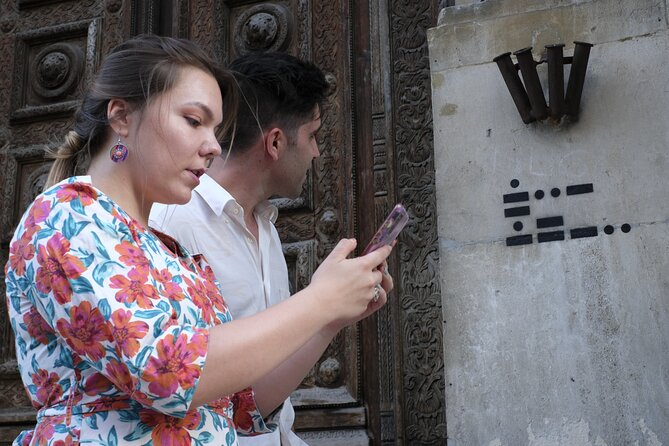
This is best for people who like solving clues and reading a city like it’s a puzzle. If you enjoy walking, spotting details, and moving at your own pace, the format fits well.
It’s also a good match if you want something that works as a break from theme-park logistics. You get a structured activity without needing reservations at a single indoor venue.
It might be less ideal if you strongly prefer:
- a live guide to confirm you’re in the right place,
- friction-free navigation every time,
- or a story experience that feels fully polished in every stop.
Because some feedback points to outdated or incomplete clue elements, the game can feel frustrating if your tolerance for tech and uncertainty is low.
On the positive side, the experience is designed for most travelers can participate, it allows service animals, and it’s near public transportation. So it’s built to be accessible for a wider set of visitors than the average hard-core “hike challenge.”
Practical Tips That Keep the Game Fun
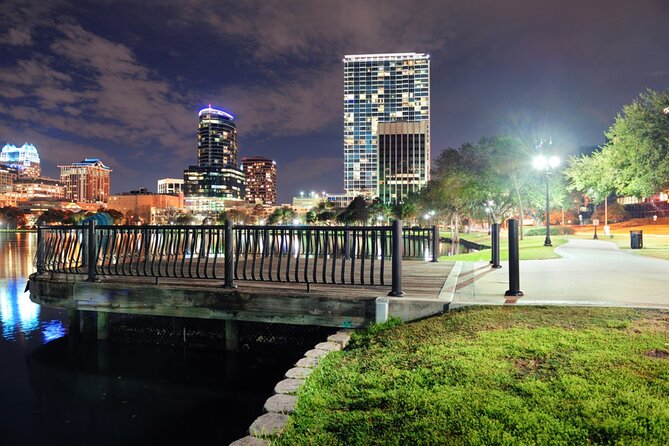
Here are the things that can make the difference between a fun walk and a frustrating one.
- Use one phone if you’re managing multiple games. A few people have reported using multiple phones without success, so keep it simple: one working setup per game attempt.
- Slow down at each clue stop. The game works when you look carefully enough to match the story’s expectation to the real location.
- Plan for outdoor sightlines. If a structure part is partially blocked (foliage or angle), step around and check from different positions rather than standing in one spot.
- Know you can ask for help. The experience offers 24/7 customer support, which matters if the app route or story logic fails mid-walk.
And one booking-minded note: the game is often booked about 48 days in advance on average, so if you’re aiming for a specific day/time, it’s smart to lock it in earlier rather than assuming last-minute availability.
Should You Book This Orlando Ghost Hunt?

I’d book this if you want a low-cost, low-pressure activity that blends a spooky story with a real downtown walking route. At $7.19, the value is in getting a structured clue game without paying for a guided service, plus the stops are mostly listed as free for the experience.
I’d hesitate if you:
- hate app navigation issues,
- plan to do it late at night when visibility is worse,
- or expect every clue location to be perfectly mapped and fully visible at all angles.
If you do book, treat it like an outdoor puzzle first, and a spooky story second. When the tech cooperates, it’s a smart, affordable way to see downtown Orlando in a different light—without waiting on anyone.
FAQ
Where does the ghost hunt start?
It starts at 566 E Robinson St, Orlando, FL 32803, USA at the Chinese Pagoda.
Where do I finish?
You finish at Orlando Reeves Marker in the Lake Eola area (the end listing also references Lake Eola Pagoda).
How long does the Quest Experience take?
The duration is approximately 45 minutes to 1 hour 15 minutes.
Is there a tour guide with this experience?
No. This is a private, self-guided game you play on your phone using the Questo app.
What’s included in the ticket price?
You get the city exploration game on your phone (Questo app) and access to 24/7 customer support.
Are attraction entry tickets included?
Admission tickets are not included for at least one stop: the Orange County Regional History Center. Other stops are listed as admission ticket free.
Can I go at my own pace?
Yes. The stops are described as self-paced, and you can stop for as long as you like before continuing.
Is this experience private?
Yes. It’s listed as a private tour/activity, meaning only your group participates.
What language is the experience in?
It’s offered in English.
Can I cancel for a refund?
Yes. You can cancel for free up to 24 hours in advance for a full refund.