REVIEW · ORLANDO
Florida Bioluminescent Kayak & Paddle Board Adventure
Book on Viator →Operated by A Paddle in Paradise (Paddle Board / Kayak Tours) · Bookable on Viator
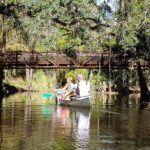
Florida nights can turn magical fast. This bioluminescent kayak and paddleboard adventure brings you to the Indian River Lagoon, where the water can glow blue with dinoflagellates in warmer months and comb jellies can light up in cooler seasons. You pick your ride—stand-up paddleboard or a stable kayak-mod—and you do it with a small group, led by local guides who know the patterns of the lagoon.
I especially like two things about this experience. First, you’re in good hands with guides such as Nate, Jess, and Jeff, who explain what you’re seeing and keep the vibe calm (not chaotic). Second, practical extras are handled for you: bug spray is provided, and photos are included so you don’t have to rely on blurry phone shots in the dark.
One thing to keep in mind: the glow depends on natural conditions. Even when everything is set up well, you may not get the dramatic brightness you hoped for, especially if weather is off or you’re in a transitional time of year. The tradeoff is that when the conditions line up, the effect is genuinely unreal.
In This Review
- Key things worth knowing before you go
- Indian River Lagoon Bioluminescence: Why This Paddle Beats a Theme Park
- SUP or Kayak-Mod: Picking the Right Boat for a Dark, Quiet Trip
- Stand-up paddleboard (SUP)
- Kayak-Mod (stable kayak-style)
- When You’ll See the Glow: Dinoflagellates in Summer vs Comb Jellies in Winter
- From 951 Kiwanis Island Park to the First Glowing Patches
- Spotting Glowing Water: The Tricks That Actually Help
- Weather, Rain, and Florida Bugs: What to Pack (and What to Laugh Off)
- Why the Small Group Size Feels Like Real Value
- Photos, Waterproof Phone Gear, and Getting Your Memories
- Who Should Book This Bioluminescent Kayak or Paddleboard Adventure
- Should You Book? My Take for the Right Traveler
- FAQ
- What should I choose, a paddleboard or a kayak-mod?
- When can I see dinoflagellates versus comb jellies?
- How long is the kayaking or paddleboarding adventure?
- Where does the tour start?
- Is bug spray included?
- Will the tour run in rain?
Key things worth knowing before you go
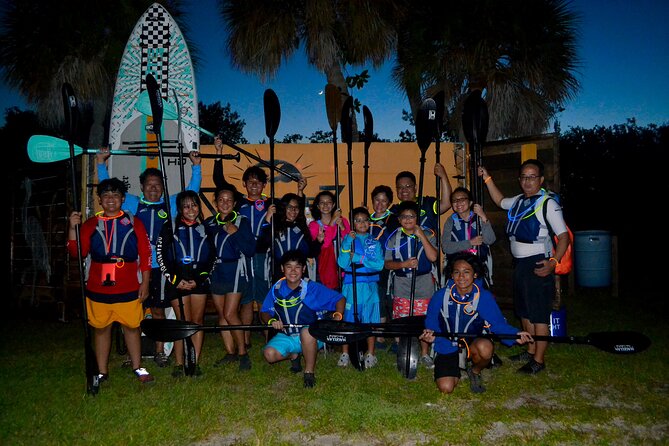
- Small group size (max 12): you’ll get attention, space, and time to explore.
- Dinoflagellates vs comb jellies by season: May–early October often leans dinoflagellates; cooler months shift toward glowing comb jellies.
- NOQUA lighting system for wildlife: it can help you spot nocturnal creatures along the way.
- You choose SUP or a stable kayak-mod: the kayak-mod is built for higher comfort and stability.
- Bug spray and photos are part of the experience: less to pack, more to remember.
Indian River Lagoon Bioluminescence: Why This Paddle Beats a Theme Park
Bioluminescence is one of those natural events that feels fake—until you see it in motion. Here, you’re paddling the Indian River Lagoon at night, in an area where the lagoon’s biology can produce glowing trails. In summer, that glow is often tied to bioluminescent dinoflagellates. In winter, you’re more likely to see glowing comb jellies, which are a different look and a different kind of “wow.”
What I like about this setup is that it turns “seeing wildlife” into something active. You’re not just standing still. You’re creating the motion that helps the glow show up as you paddle and stir the water. And because it’s a small-group outing, the guide can steer you toward the most promising stretches without turning the experience into a rushed conveyor belt.
Also, this area is close enough to Orlando and Cocoa Beach that you don’t need an all-day trek. You can do this as a real night activity, not a complicated travel project.
You can also read our reviews of more tours and experiences in Orlando
SUP or Kayak-Mod: Picking the Right Boat for a Dark, Quiet Trip
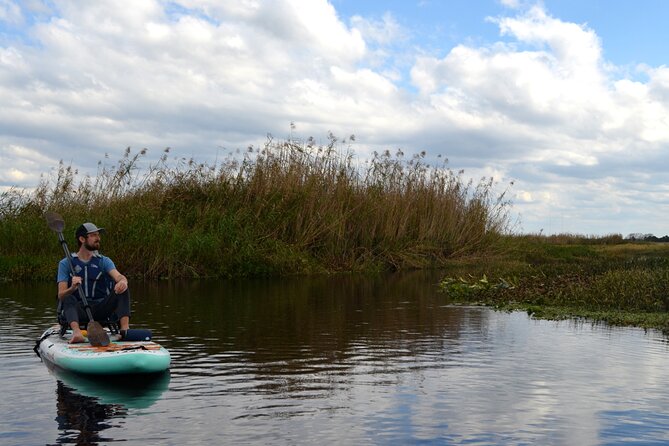
You get a choice of two craft types:
Stand-up paddleboard (SUP)
A SUP is great if you already paddle around and you want to feel more “connected” to the water. It’s also a fun way to spot patterns in the lagoon since you’re upright and more easily scanning the water.
Kayak-Mod (stable kayak-style)
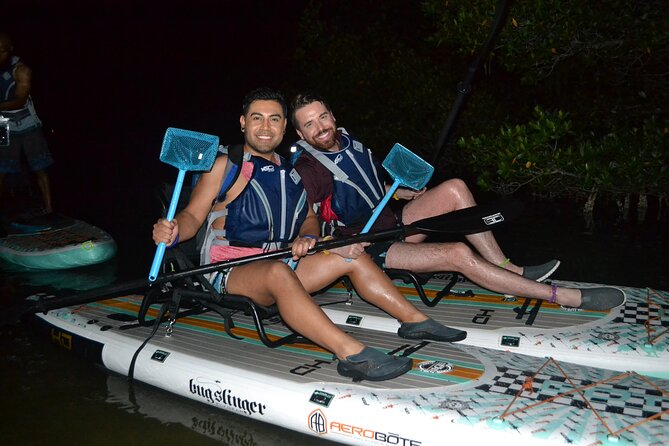
The kayak-mod is designed for higher comfort and stability than a traditional kayak. That matters at night when you want to focus on the glow instead of balancing every second. If you’re with kids, if you’re a beginner, or if you just don’t want your evening to turn into a balancing act, this option usually makes the experience easier.
A key point: this trip is hands-on. You paddle and operate your own watercraft. That doesn’t mean you need to be an athlete, but you do need to be ready to work the paddle and stay steady.
When You’ll See the Glow: Dinoflagellates in Summer vs Comb Jellies in Winter
The seasonal timing here is one of the most useful parts of the whole experience. The tour specifically notes two main glow “eras”:
- May to early October: you’re more likely to see glowing blue trails from bioluminescent dinoflagellates (with late-season jellies possible).
- Early October/November to April: you’re more likely to see glowing comb jellies, plus other nocturnal wildlife.
October is a transitional month. That means you might see both, depending on conditions. I’d treat October as “expect variety,” not “guaranteed brightness of one exact thing.”
And there’s another helpful detail: the tour uses NOQUA lighting systems. That’s meant to illuminate wildlife so you can spot creatures that you otherwise would miss in near-total darkness. You might see things like stingrays, puffer fish, and horseshoe crabs when conditions allow.
In short: check the month you’re going, and set your expectations based on what the lagoon tends to produce then.

From 951 Kiwanis Island Park to the First Glowing Patches
The experience starts and ends at the same place: 951 Kiwanis Island Park Rd, Merritt Island, FL 32952. Getting there is part of the charm here. The departure point is easy to find, and the guides give clear directions so you aren’t stuck driving in circles at dusk.
Once you meet up, the tour moves into gear-up mode. You’ll be set for the water and told how the evening will work, including what to look for. You’ll also have bug spray provided, so you won’t need to hunt for repellent at the last minute.
Then it’s out on the Indian River Lagoon for about 1 hour 45 minutes on the water. That length is ideal for bioluminescence: long enough for the water to show you multiple glowing pockets, but not so long that your arms and attention go numb.
On the water, the pace tends to stay relaxed. Multiple guides are described as patient and safety-minded, and some guests mention moments of freedom to explore within reason—meaning you don’t just stare forward the entire time like it’s a science video. Instead, you can follow the guide’s cues and then drift into your own small “glow discoveries.”
You’ll also likely do some form of guided spotting. One guest described an interactive tip: make a fist, put it in the water, and open it. That kind of prompt makes the glow appear right where you can see it instead of hoping the plankton cooperates.
Finally, you paddle back to the launch area and wrap up the trip right where you started.
Spotting Glowing Water: The Tricks That Actually Help
Here’s the honest truth about bioluminescence: it can be subtle at first. Some glow shows up in faint highlights, then suddenly you hit a patch where the water lights up more intensely. That’s exactly what multiple guests described—conditions can start mild, then get spectacular.
To improve your odds, lean into what the guides teach:
- Follow the guide’s directions on where to look in the water column. The lagoon has different pockets, and your paddling path matters.
- Do the hands-in-water moments when the guide prompts them. That’s often where the effect is easiest to see clearly.
- Pay attention to the timing and water motion. Slower drifting can feel calmer, but paddling through the right stretch can help you see glowing trails.
Also, expect the night sky to be part of the experience. Several guests mention starry skies and a quiet, peaceful atmosphere that makes the lagoon feel bigger than it is.
One more practical note: a few people mention mosquitoes even with bug spray provided. That doesn’t mean the tour is a bad idea—it just means you should apply the repellent you’re given generously before you get fully dressed for the evening.
Weather, Rain, and Florida Bugs: What to Pack (and What to Laugh Off)
This tour runs rain or shine, but there are limits. The outing won’t launch if there’s thunder, lightning, or heavy winds. If weather turns severe, you may get a short weather hold—up to 30 minutes. If it’s not safe after that, the experience will cancel and you should receive a refund.
So pack for discomfort, not for a hurricane:
- Wear clothes you’re okay with getting damp.
- Bring a layer for the evening air, since you’re out after sunset.
- Use the bug spray they provide, and consider re-applying if you’re prone to bites.
Mosquitoes get named a lot in the reviews. That’s not unique to this tour—it’s Florida at night. But it’s still worth taking seriously because it can affect how relaxed you feel when the glow starts.
If you’re deciding between going or staying home because the weather looks iffy, go in with a safety-first mindset. The guides prioritize safe conditions and will adjust the plan if winds and storms spike.
Why the Small Group Size Feels Like Real Value
This experience caps at 12 travelers, and the outing runs on a small-group model. That has real consequences for how the night feels.
With a group that size:
- You can hear instructions without shouting.
- You can ask questions and actually get answers.
- You’re not stuck waiting in line to get your chance at seeing glowing water.
Some guests specifically praised the unhurried feel. Instead of feeling rushed, they described having time to explore at their own pace while still getting guided attention. That balance matters on a night trip, where the goal isn’t to “check a box.” It’s to experience the glow when it appears.
And because it’s a smaller operator format, the highlight notes that booking this style of tour can help you keep costs down compared with bigger, busier setups—without turning the evening into a mass activity.
Photos, Waterproof Phone Gear, and Getting Your Memories
Photos are included. That’s a big deal for bioluminescence nights because phone cameras often struggle in low light. One guest noted that the guide took photos of the group, and another mentioned they accessed images through the tour website under a Memories tab.
In practical terms:
- Assume you’ll get some kind of photo set included with your booking.
- If you’re expecting the photos by email and don’t see them immediately, check the tour’s photo access area. Some bookings can have timing quirks between platforms.
Also, some reviews mention the guide provided waterproof pouches for phones. That’s not listed in the basic inclusions you were given, so I can’t promise it every night. But if you have a waterproof case or small pouch, it’s still smart to bring one. If the operator provides gear, great. If not, you’ll still be covered.
Who Should Book This Bioluminescent Kayak or Paddleboard Adventure
This is a strong match if you want a nature-focused night that’s different from Orlando theme parks. It’s also a good fit for people who like learning while they’re doing something fun—because the guides tend to explain the lagoon’s biology and what creates the glow.
You’ll likely enjoy it if you:
- Want a quiet, starry night on the water
- Are traveling as a couple, family, or solo traveler
- Prefer small-group experiences and guided moments with time to explore
It’s also friendly for beginners if you’re comfortable operating your craft. Multiple guests described it as easy and safe, even for kids and first-timers.
Two reality checks, based on the tour data:
- It’s physical. You must paddle and operate your watercraft.
- There’s an equipment max weight of 285 lbs. If that applies, contact the operator before booking.
Also, the tour requires good enough weather. If you go with the mindset that nature can change plans, you’ll handle delays or short holds better.
Should You Book? My Take for the Right Traveler
Book this if your main goal is a genuine night nature experience in the Indian River Lagoon, with a small group, and you’re open to seasonal glow rather than expecting one specific effect every single night.
Don’t book if you need guaranteed fireworks-level brightness. The glow depends on conditions and timing, and while many nights deliver dramatic light, there are nights where it’s faint or not what you hoped for. That’s not a reason to skip—it’s just the reality of bioluminescence.
If you can, pick your month carefully:
- Summer dates lean dinoflagellates and glowing trails.
- Winter dates lean comb jellies and other nocturnal wildlife.
And if you do book: use the bug spray well, dress for cool damp air, and listen to the guide. The glow is often best where the guide sends you, and those small prompts—like hands-in-water moments—can turn a subtle night into a memorable one.
FAQ
What should I choose, a paddleboard or a kayak-mod?
You can choose between a stand-up paddleboard (SUP) or a kayak-mod. The kayak-mod is described as more comfortable and stable than a traditional kayak, which can make it a good choice for beginners or anyone who wants extra stability.
When can I see dinoflagellates versus comb jellies?
May to early October is when dinoflagellates are more likely, with glowing blue trails possible. Early October/November through April is when you’re more likely to see glowing comb jellies and other nocturnal wildlife. October can be transitional, so you may see both.
How long is the kayaking or paddleboarding adventure?
The experience lasts about 1 hour 45 minutes.
Where does the tour start?
The meeting point is 951 Kiwanis Island Park Rd, Merritt Island, FL 32952, USA. The tour ends back at the same location.
Is bug spray included?
Yes. Bug spray is provided, so you don’t need to bring it.
Will the tour run in rain?
It runs rain or shine, as long as conditions are safe. The tour will not start in the area with thunder, lightning, or heavy winds. In severe weather, there may be a short weather hold, and if it’s not safe afterward, a refund is provided.