REVIEW · ORLANDO
2 Hours Escape Room A Knight To Escape
Book on Viator →Operated by The Escape Effect · Bookable on Viator
Two hours inside a medieval split-room. A Knight To Escape in Orlando sends you into Stonebury Castle, where your team is split between a dark dungeon and an open courtyard to solve puzzles and free teammates.
I love the built-from-scratch medieval set design and the strong emphasis on teamwork and communication. One thing to consider: because the room is split, you might spend stretches waiting on the other side to make progress, and clue timing can affect your momentum.
In This Review
- Key Highlights Worth Knowing
- Stonebury Castle Split-Start: What the 2 Hours Really Feels Like
- Your “Itinerary”: Dungeon Work, Courtyard Work, and Back-and-Forth Progress
- Puzzles and Difficulty: Clever Moments vs Confusing Flow
- Hosts, Clue Requests, and the Waiting Factor
- The Set Design: Why Stonebury Castle Works
- Price and Value: Is $69.95 Worth Your Time?
- Who Should Book This Escape Room?
- What to Bring and How to Prepare (Including the Cold Rooms)
- Should You Book A Knight To Escape?
- FAQ
- Where is A Knight To Escape located?
- How long is the escape room experience?
- What does A Knight To Escape cost?
- What ticket format do I need?
- Is this experience private?
- Can I bring a service animal?
- Is the venue near public transportation?
- How difficult is the escape room?
- What is the cancellation policy?
Key Highlights Worth Knowing
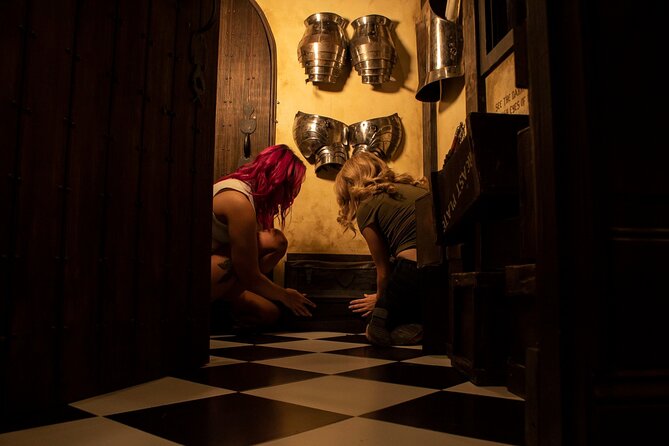
- Longest escape room in Florida (and a proper “event” length at about 2 hours)
- Split-start gameplay between the dungeon and the courtyard, with prisoner vs knight roles
- Heavy teamwork requirement, even though your group is separated
- A difficulty level players describe as around 9 out of 10
- Cold rooms reported by players, so plan to bring a layer
Stonebury Castle Split-Start: What the 2 Hours Really Feels Like
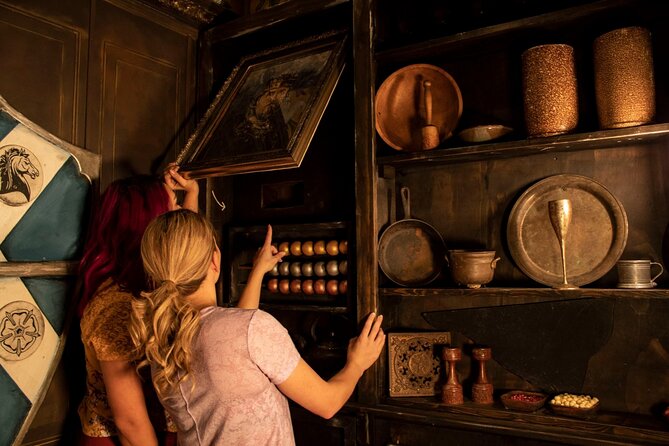
The big hook here is the way A Knight To Escape uses space. You are not just walking into one locked room and solving one linear chain of puzzles. Instead, you’ll be split between two areas inside the castle: an eerie dungeon and an imposing courtyard.
Your group takes on roles tied to the theme, either acting like common prisoners or like courageous knights. The goal is shared—rescue teammates and escape—but the method is less “everyone in the same spot” and more “coordinated work across the castle.” If your group likes discussing clues out loud fast and passing info quickly, this setup can feel very satisfying.
From a value standpoint, this split layout matters. A 2-hour escape room is short enough that you need movement and progress. When the structure forces one side to wait, your experience becomes more about pacing than pure brainpower. Some groups love that tension; others find it slows the fun.
You can also read our reviews of more tours and experiences in Orlando



Your “Itinerary”: Dungeon Work, Courtyard Work, and Back-and-Forth Progress

There’s no public transportation-led walking tour here; you’re basically in one place for the whole adventure. Your day plan is simple: show up at the address in Orlando, then settle into Stonebury Castle for a timed escape.
Here’s how the time typically shakes out based on how the experience is described and how players report the flow:
- Start inside the castle with your team split
You’ll likely take in the theme and get your first puzzle tasks in your assigned area. One side works while the other side starts with their own objectives.
- Solve a step and share what you’ve got
A key part of the structure is that once one side solves something, they pass along what they receive or discover so the other side can keep going. That creates a rhythm, not a single continuous stream.
- Repeat the solve-and-pass cycle
Players who were less thrilled described long periods where one side had more active work while the other side waited for progress. The good news is that the split design can also prevent boredom if both sides stay engaged.
- Communication stays important even when you’re apart
Your group is separated, but you still communicate and coordinate. The room is built so you can work together, not just sit in silence.
If you and your group are the type that hates waiting for other people to catch up, you’ll want to plan your strategy around that. Try to assign clear roles at the start—one person calls out what they see, another tracks puzzle pieces, and someone else acts as the “switchboard” for passing info across the split.
Puzzles and Difficulty: Clever Moments vs Confusing Flow
This is a puzzle-forward experience, and most players who enjoyed it praised the challenge. One review specifically flags the difficulty as about 9 out of 10, which is high for a 2-hour room. Translation: you’re not expected to breeze through this.
The best moments, from what players describe, come from puzzles that feel themed and logically connected. You’re in a knight/prisoner scenario inside a castle, so the puzzles have a chance to feel like they belong in the story.
Still, there’s a downside that shows up in the less positive feedback: puzzle flow can feel uneven. One review claims that some puzzles don’t fully make sense even after solving, and another notes that there may be a limited number of total puzzles for the time length, with a lot of the 2 hours spent trying configurations.
That doesn’t automatically mean it will be frustrating for you. It does mean you should go in ready for trial-and-error, and ready to ask for help when you get stuck. If your group is highly experienced and hates vague puzzle design, you may feel more irritation than excitement.
Hosts, Clue Requests, and the Waiting Factor
The host experience seems mixed. On the positive side, several players praised staff for being courteous and helpful, with clear guidance when needed. There are also comments about a GM who was nice and courteous, and hosts who were great with clues.
On the other hand, one detailed criticism says the game masters don’t actively watch your game all the time. Instead, they may only peek in when you hit a button to request a hint. That design choice can change everything if your team solves the “wrong” part of a multi-step puzzle or uses pieces in a way that doesn’t get corrected promptly.
Another practical detail: players report that clue timing can include messages on a screen saying the host will be with you shortly. Even a few minutes can feel long in a timed room, especially when you’re already on a strict 2-hour clock. One reviewer mentioned delays of about 3 to 4 minutes for clues, which might not sound huge, but it can be the difference between finishing and scrambling.
What you can do: when you request a hint, make it specific. Instead of asking what to do, ask what you’re missing conceptually. For example, you might ask whether your team is trying the right kind of solution path. That sort of targeted question tends to reduce wasted time.
The Set Design: Why Stonebury Castle Works
This is where most of the praise lands. Players consistently highlight the beautiful set design and how the whole place looks and feels well built. If you’ve done a lot of escape rooms, you know the difference between a themed room and a truly constructed environment. Here, the castle setting is a core part of the appeal.
That matters for a few reasons:
- It makes the split-room concept feel more believable. A dungeon isn’t just a prop; it’s a space with atmosphere.
- It gives you more to look at when you’re stuck. In a good build, puzzle clues sometimes feel “placed” with intention.
- It helps the whole thing feel like a real adventure instead of a warehouse with locks.
Even the more critical review doesn’t argue with the build quality. That’s a sign the room’s production value is genuinely strong.





Price and Value: Is $69.95 Worth Your Time?
At $69.95 per person for about 2 hours, this is not a bargain escape room. It’s priced like an Orlando “major attraction,” and the experience is marketed as the crown jewel and the longest escape room in Florida.
So how do you judge value?
- If your group loves high production, medieval theming, and teamwork under pressure, you may feel this price lines up with the effort put into the environment and the difficulty level.
- If your group is extremely puzzle-purist and hates unclear puzzle flow, you might feel the price is too high for the time spent waiting, reconfiguring, or asking for hints.
The mixed reviews help you frame the risk. You’re buying a set-heavy, challenge-heavy experience with a split-room structure. That structure can be fun and strategic—or it can be annoying if your side gets stuck while the other side runs ahead.
Who Should Book This Escape Room?
A Knight To Escape suits certain groups better than others.
You’ll likely enjoy it if:
- You like escape rooms with a strong theme and lots of atmosphere
- Your group communicates well and enjoys coordinated work
- You’re okay with a high difficulty level and don’t mind using hints
You might want to think twice if:
- Your group hates waiting or hates being separated
- You’ve played many escape rooms and expect razor-clear puzzle logic
- You get frustrated when a game master isn’t actively monitoring until you request help
It also seems like a good family-style option if you’re traveling with kids or teens who can handle teamwork. At least one review calls it family fun and recommends it strongly. Just keep in mind the “cold rooms” note—comfort matters when you’re standing and thinking for 2 hours.
What to Bring and How to Prepare (Including the Cold Rooms)
One very practical tip keeps showing up: the rooms run freezing. Bring a sweater or jacket. You’ll be happier focusing on puzzles instead of shivering through the clock.
Beyond that, keep it simple:
- Wear shoes you can stand and move in comfortably
- Bring a small water bottle if they allow it in the room (the data doesn’t specify, so you might find you need to follow house rules)
- Mentally assign roles before you start so your split team stays organized
And here’s a small mindset shift: treat waiting time as part of the puzzle. If you can use that downtime to test theories, organize pieces, or update your teammate on what you’ve found, the split won’t feel as painful.
Should You Book A Knight To Escape?
Book it if you want a medieval, split-room escape with serious production value and a challenge that pushes you. The castle environment and the teamwork structure are the headline reasons to go, and many players genuinely rate the puzzles and staff experience positively.
Skip it, or choose carefully, if your biggest escape-room joy comes from perfectly clear puzzle flow with minimal waiting. The complaints about puzzle logic, hint responsiveness, and lots of standing around are real enough that they could ruin the experience for highly experienced players or anyone who gets impatient under time pressure.
If you do book, go in with warm layers, be ready to request hints, and set up your group communication so the split feels like coordination—not separation.
FAQ
Where is A Knight To Escape located?
It’s at 11701 International Dr, Orlando, FL 32821, USA. The activity ends back at the meeting point.
How long is the escape room experience?
It runs for about 2 hours.
What does A Knight To Escape cost?
The price is $69.95 per person.
What ticket format do I need?
You’ll receive a mobile ticket.
Is this experience private?
Yes. It’s a private tour/activity, so only your group participates.
Can I bring a service animal?
Yes. Service animals are allowed.
Is the venue near public transportation?
It’s listed as near public transportation.
How difficult is the escape room?
One player describes the difficulty as about 9 out of 10.
What is the cancellation policy?
You can cancel for a full refund up to 24 hours in advance. Within 24 hours, you don’t get a refund.